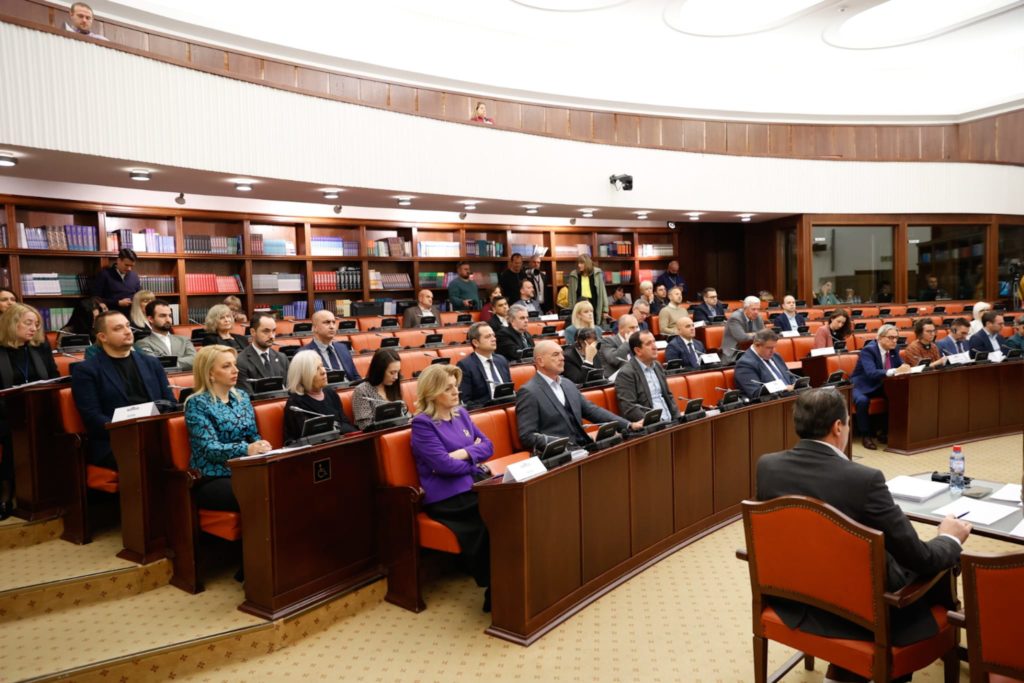
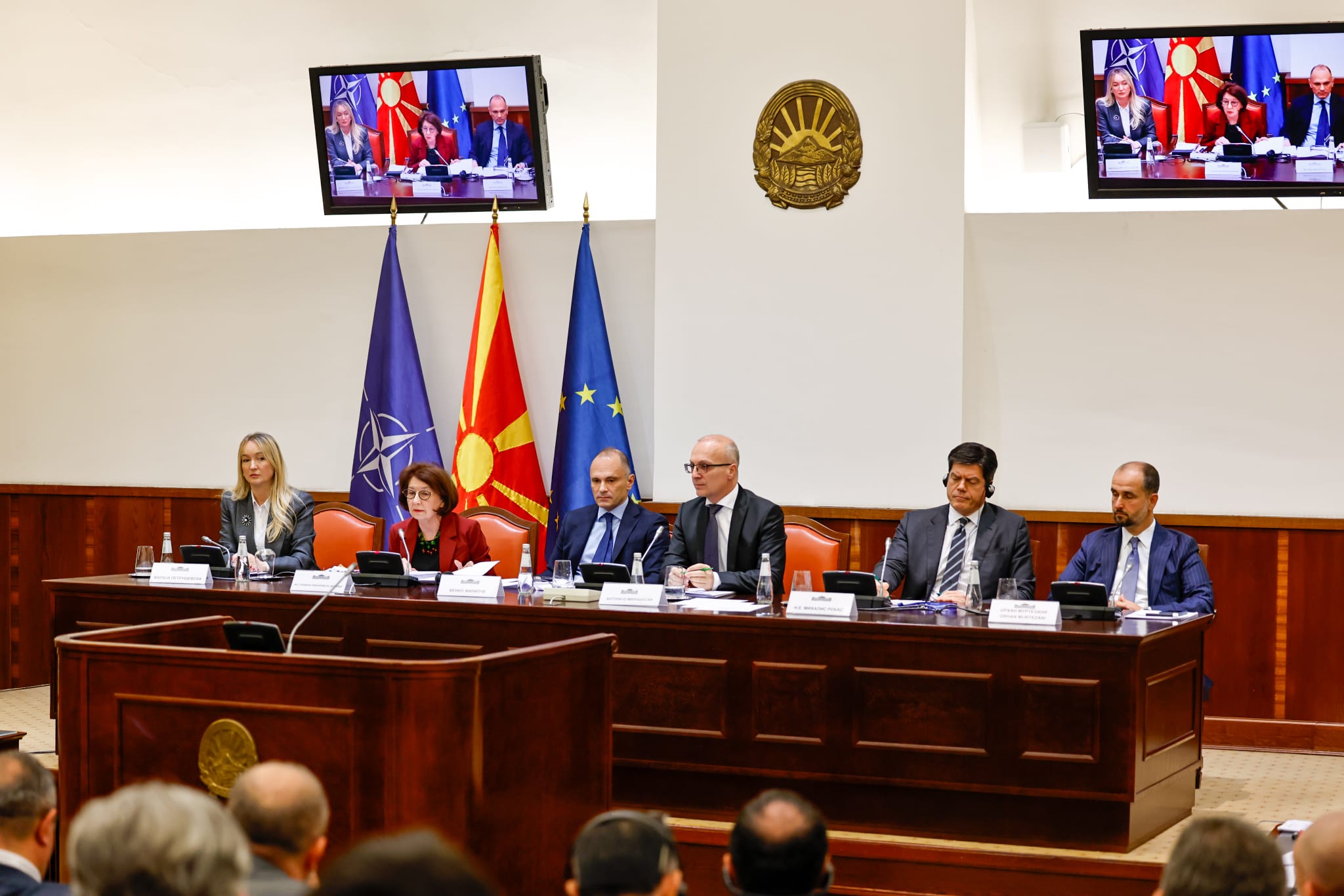
Let us dedicate ourselves to reforms, not because of the “political will” for constitutional amendments, but for the rule of law, President Gordana Siljanovska-Davkova said at the joint session of the National Council for European Integration and the Commission for European Affairs, which discussed the European Commission’s 2025 Progress Report.
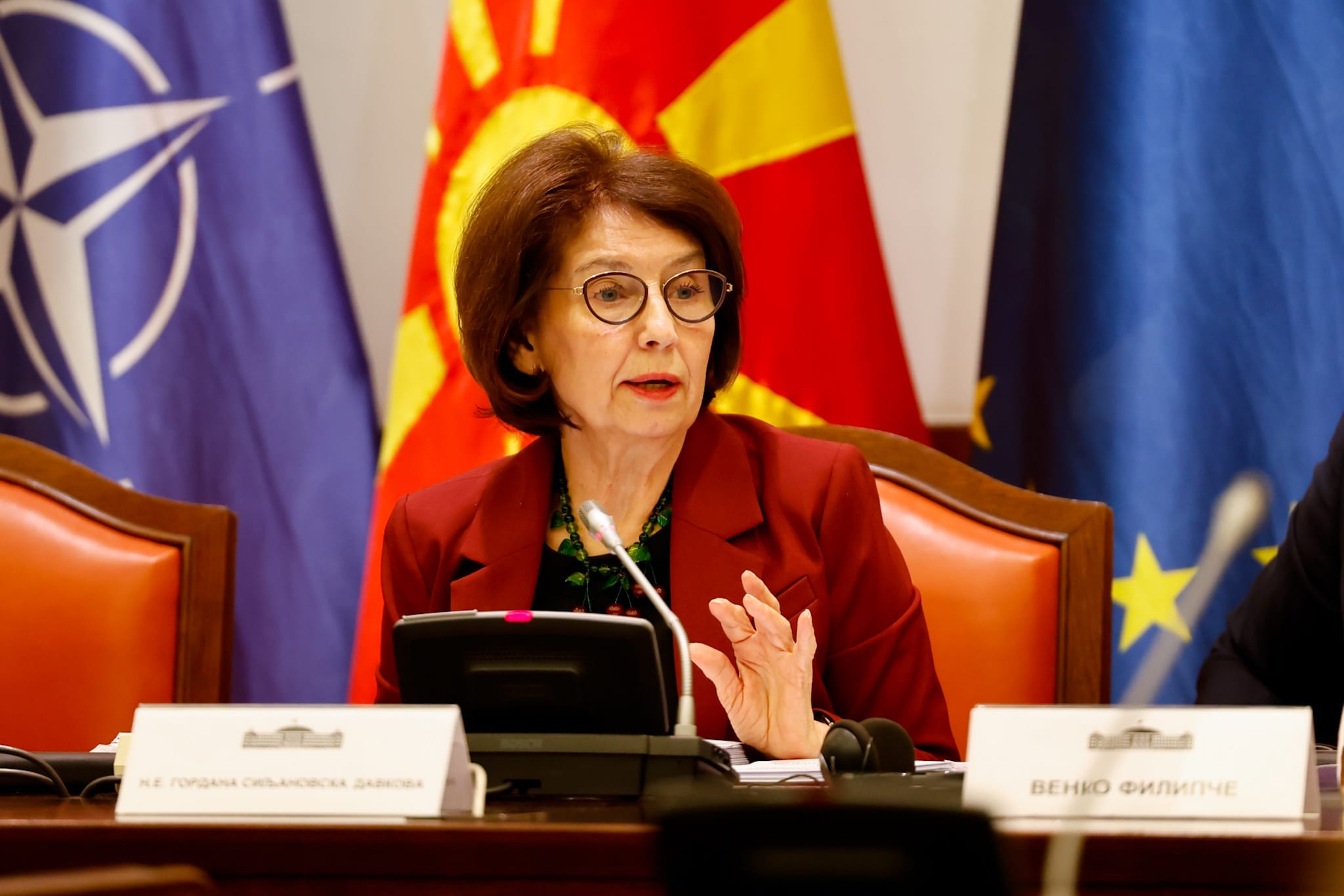
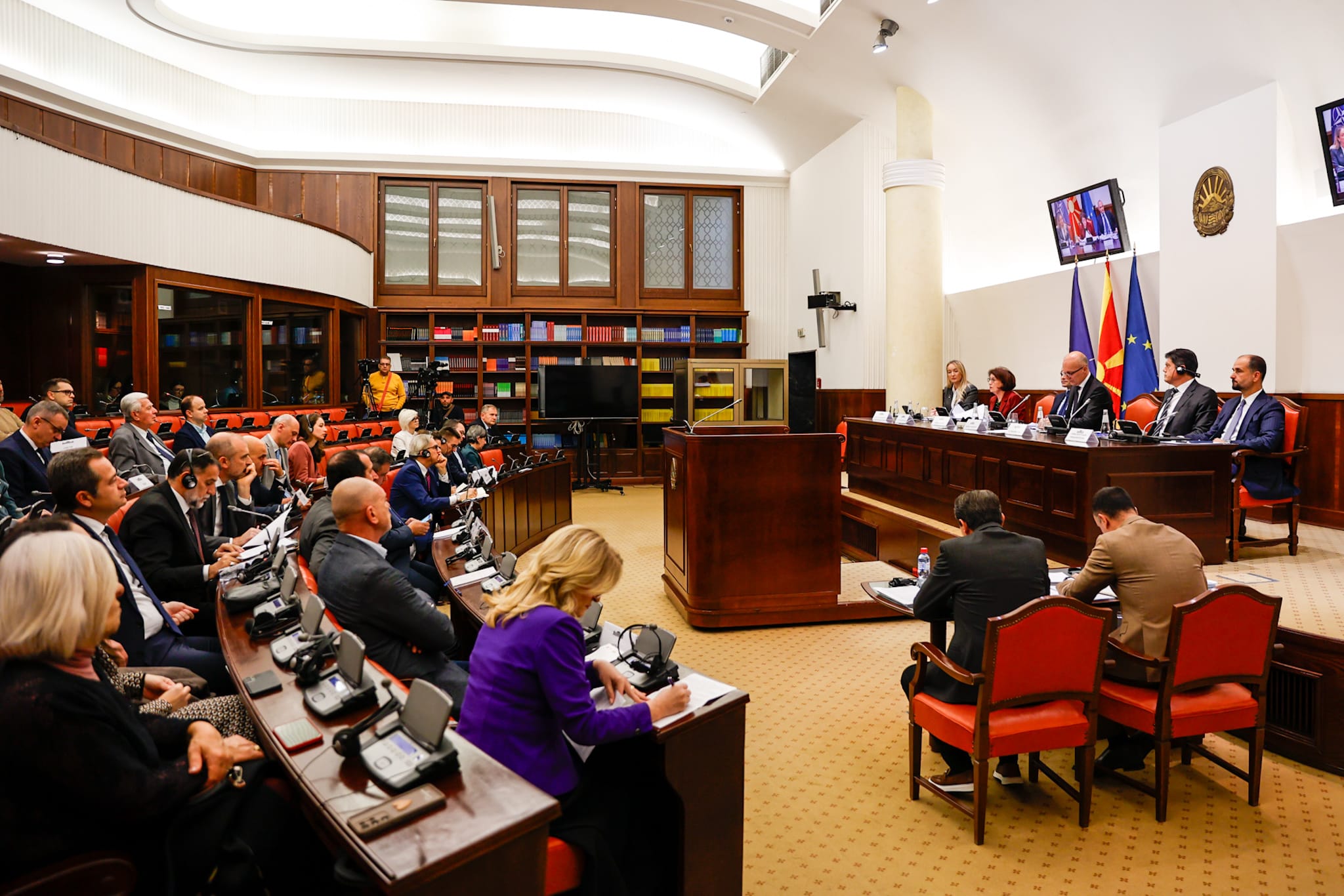
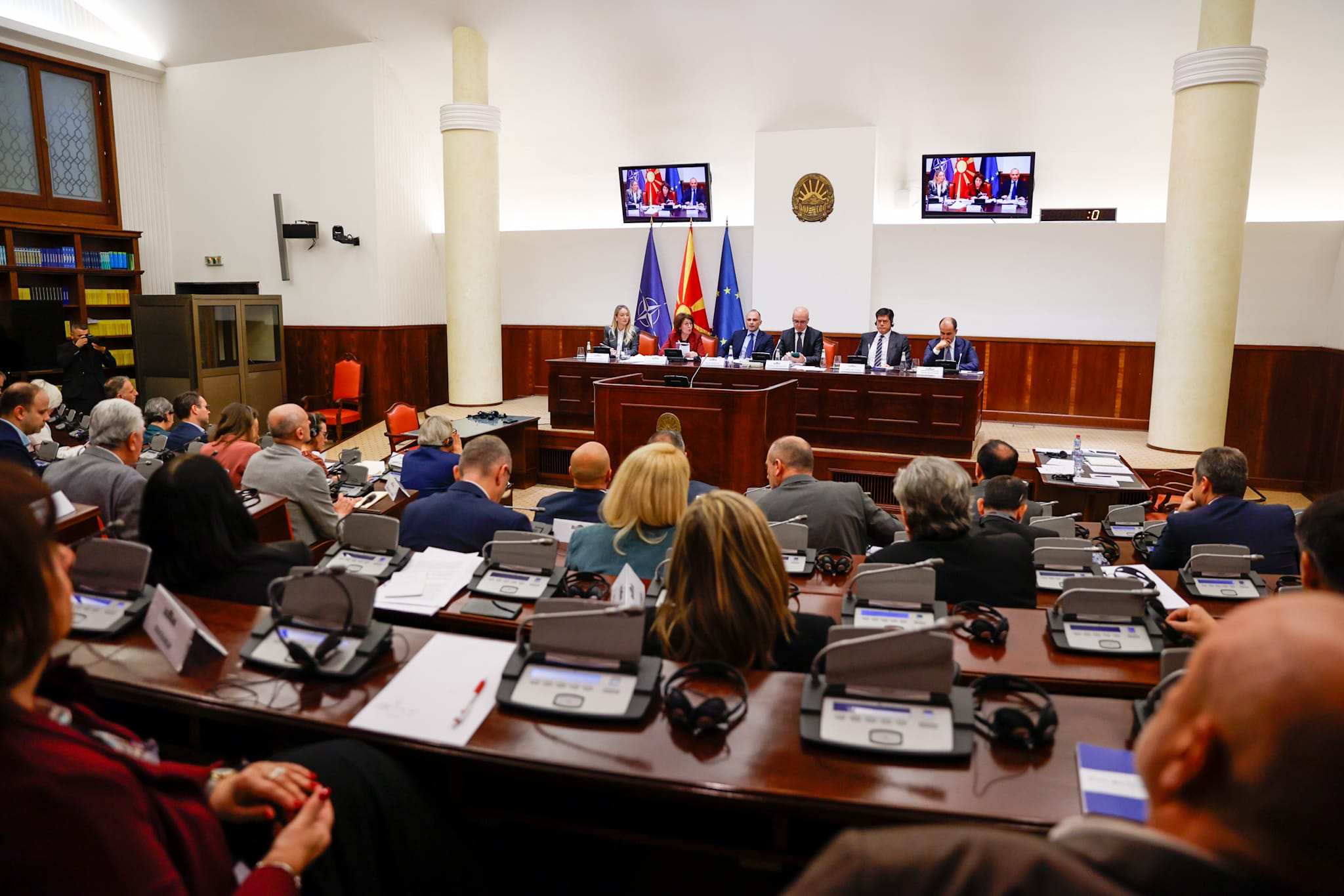
Pointing out the untenability of the remarks about the lack of political will in the country, the President stressed that we have so far demonstrated enormous readiness in implementing the EU’s requirements.
She also raised the issue of reviewing the evaluation process by the European Commission. Comparing the 16 reports so far, she pointed out that the noted progress is cyclical, not linear, which suggests that the assessments reflect the evaluator’s current perception.
This year’s assessments of the country, according to Siljanovska-Davkova, are influenced by the demands for constitutional amendments.
The President reiterated that the imposed additional conditions that hinder our European path are not in line with the fundamental values and principles of the Union, which require respect for the constitutional structures of states.
In her address, she referred to the possible complications in decision-making in the Committee on Inter-Community Relations as a result of possible constitutional amendments. She pointed out the disputability of the conclusion in the Report on the placement of women on electoral lists in unprofitable positions, given the legal guarantee of a gender-neutral quota.
The President said that the EU remains a unique political philosophy, which enjoys public support, motivates democratic reforms and stimulates changes that lead to lasting peace and stability in the Western Balkans.
According to her, the integration of the Western Balkans into the EU will put an end to Balkanization as a phenomenon. However, according to Siljanovska-Davkova, the Union still does not have a clear strategy for our European integration and practices double standards.
The session was addressed by the EU Ambassador, Michalis Rokas, the Minister for European Affairs, Orhan Murtezani, the presidents of the National Council for European Integration and the Commission for European Affairs, Venko Filipche and Antonio Milososki, as well as MPs from the government and the opposition who presented their views on this year’s EC Report.