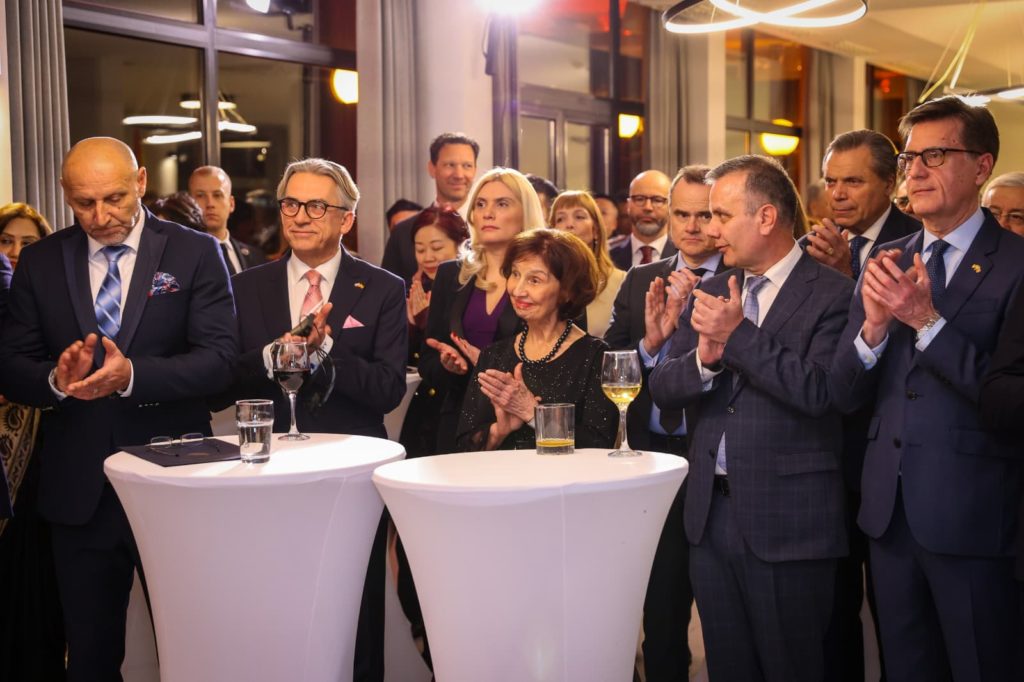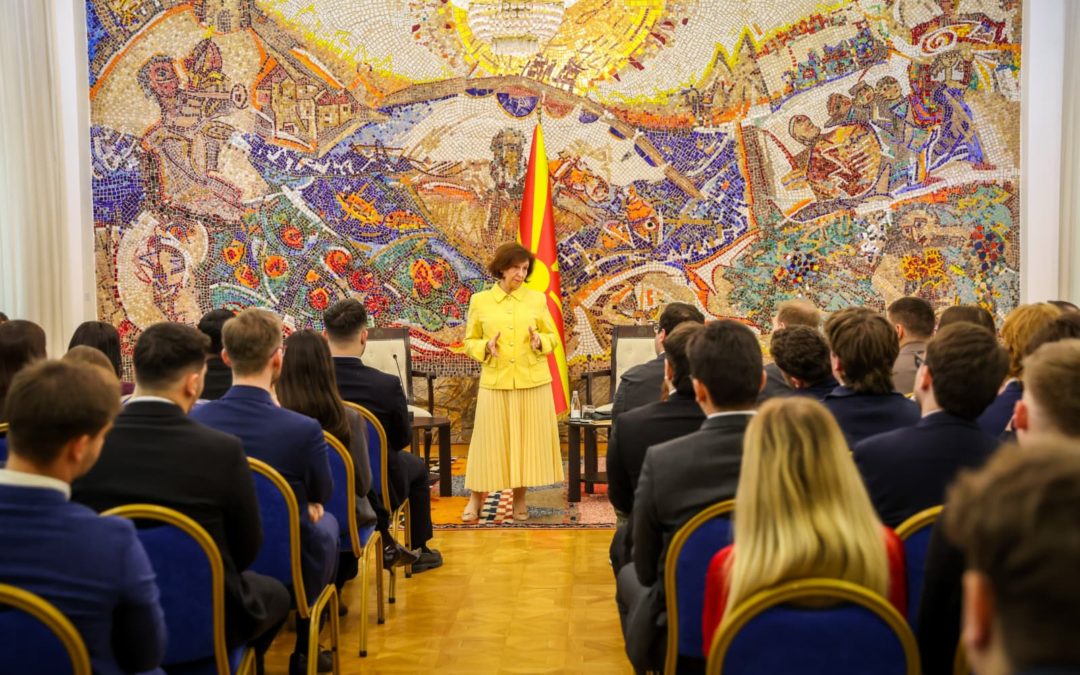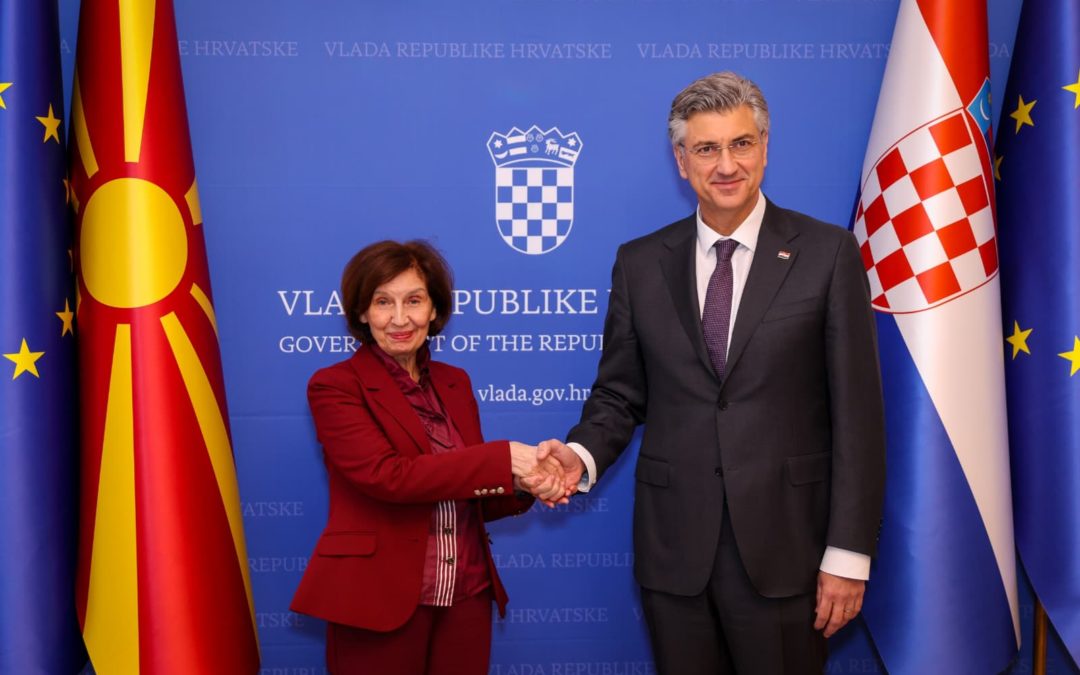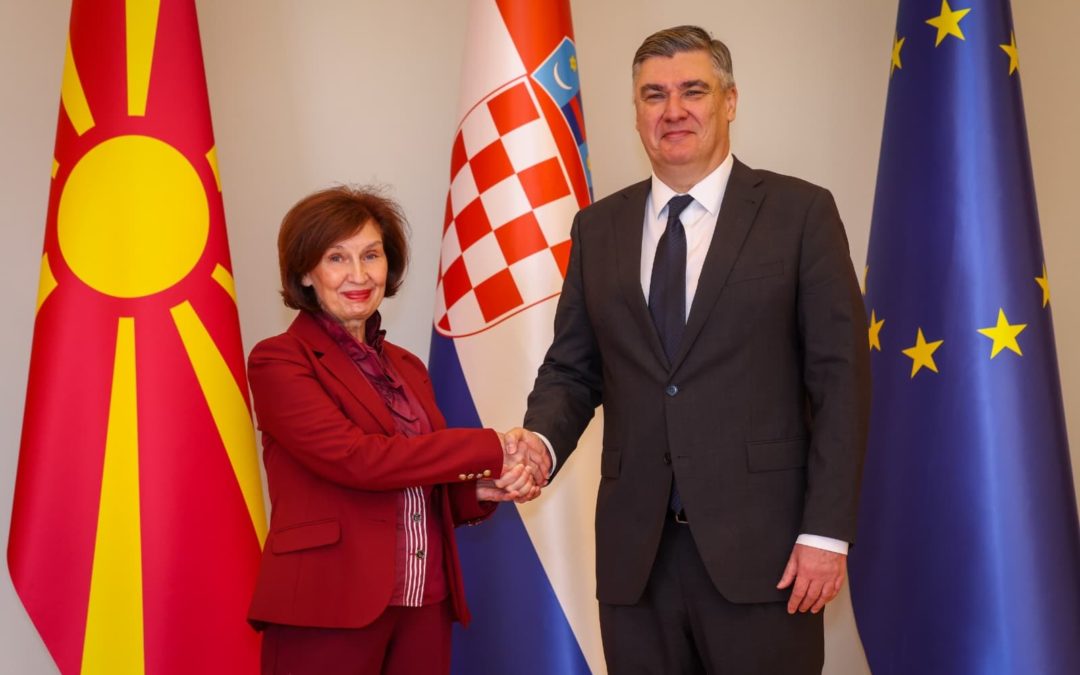
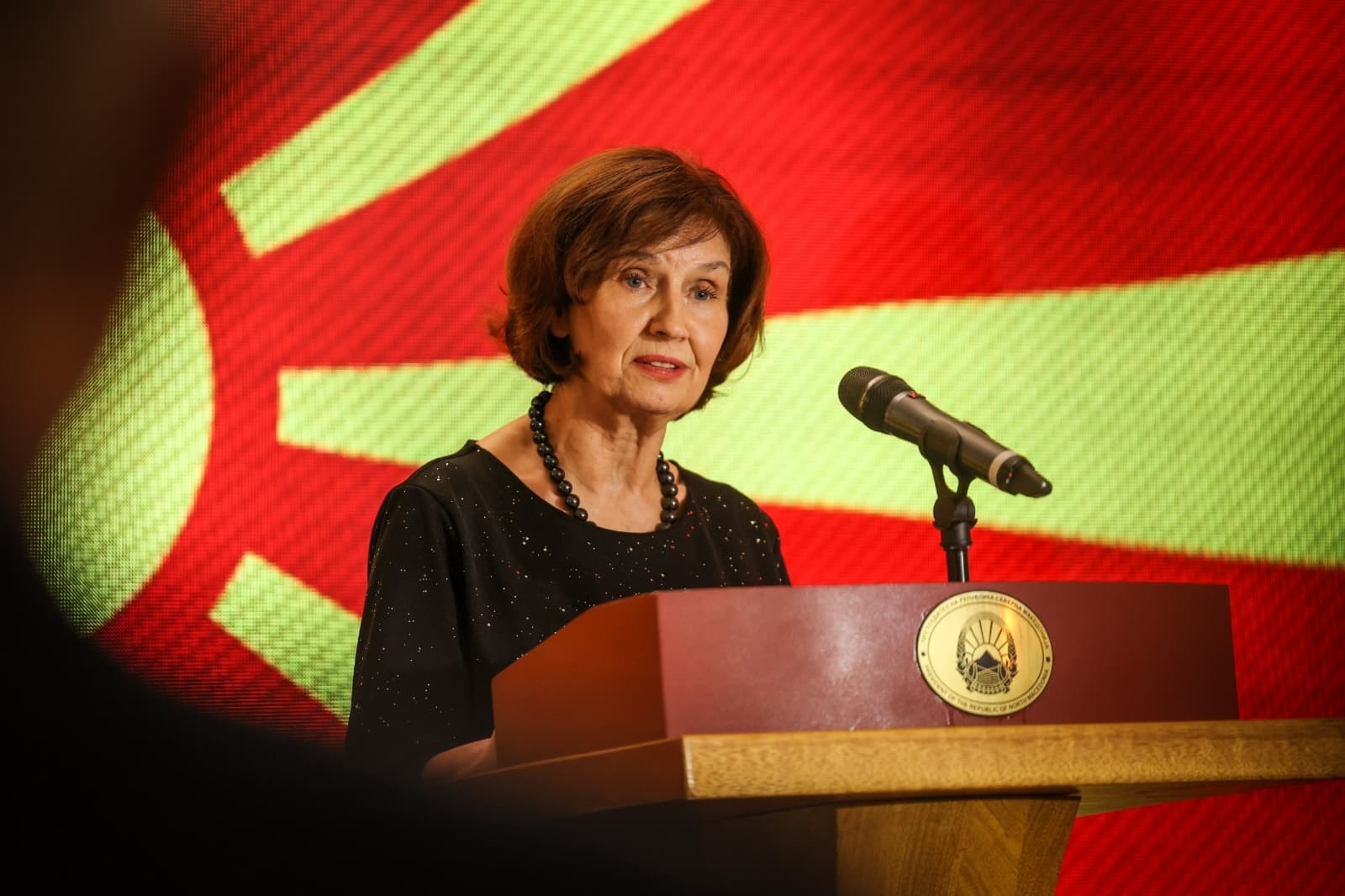
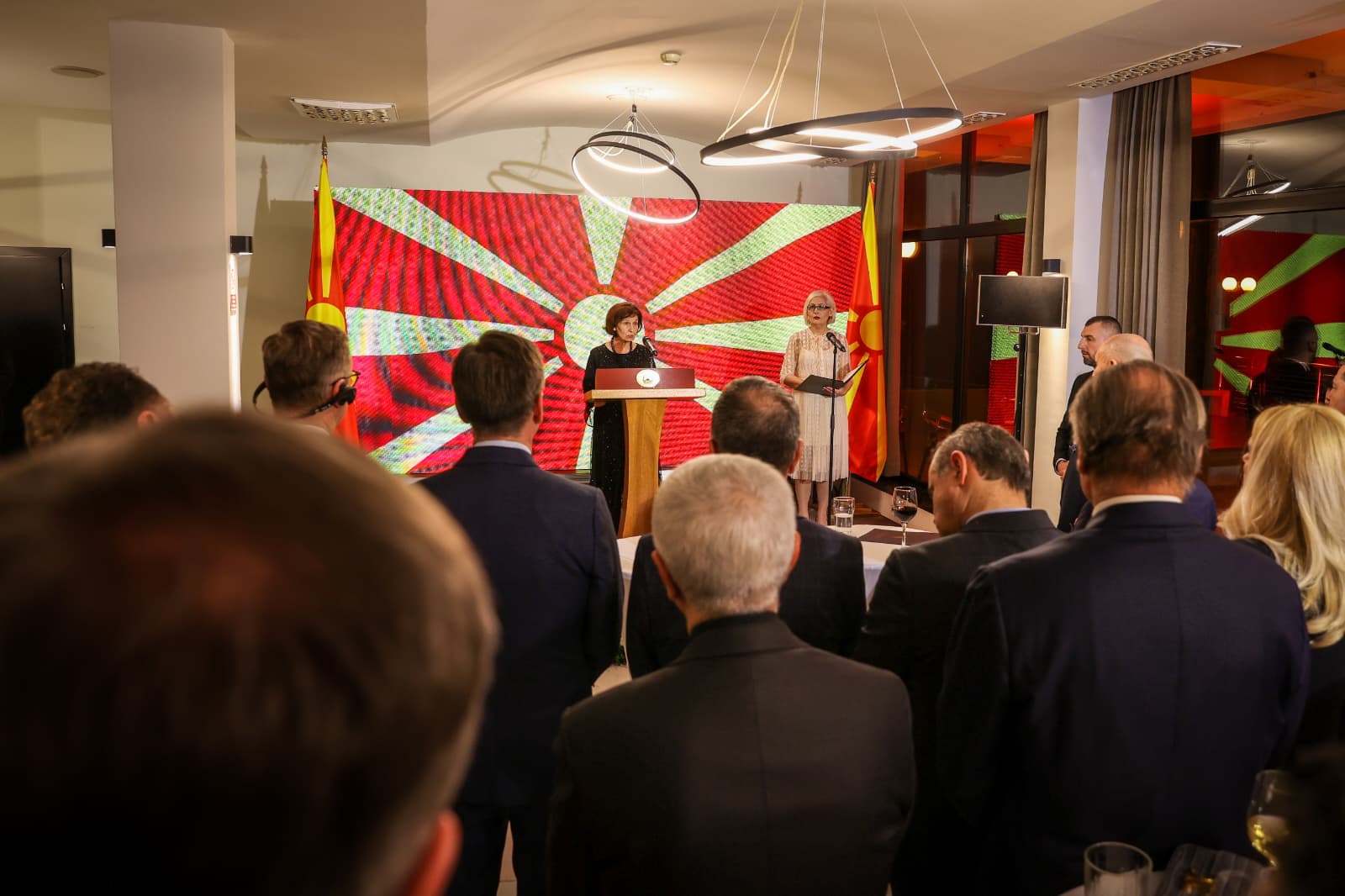
President Gordana Siljanovska-Davkova hosted a traditional annual reception for representatives of the diplomatic corps in Ohrid.
Welcoming the diplomats, the President wished them personally, their families, as well as the countries and peoples they represent, all the best.
In her address, she emphasized the importance of cultural, economic, sports and scientific, in addition to traditional diplomacy. According to the President, diplomacy is not just a set of protocol activities, but a proven civilizational mechanism that manages to simultaneously destroy walls and build bridges.
“You, diplomats, personify knowledge, ability, moderation, skills and perseverance in the search for solutions to serious challenges, preferring negotiations, agreements and signatures, rather than conflicts, blackmail and weapons”, Siljanovska-Davkova said and added that personally, she believes more in the power of argument than in the argument of power.
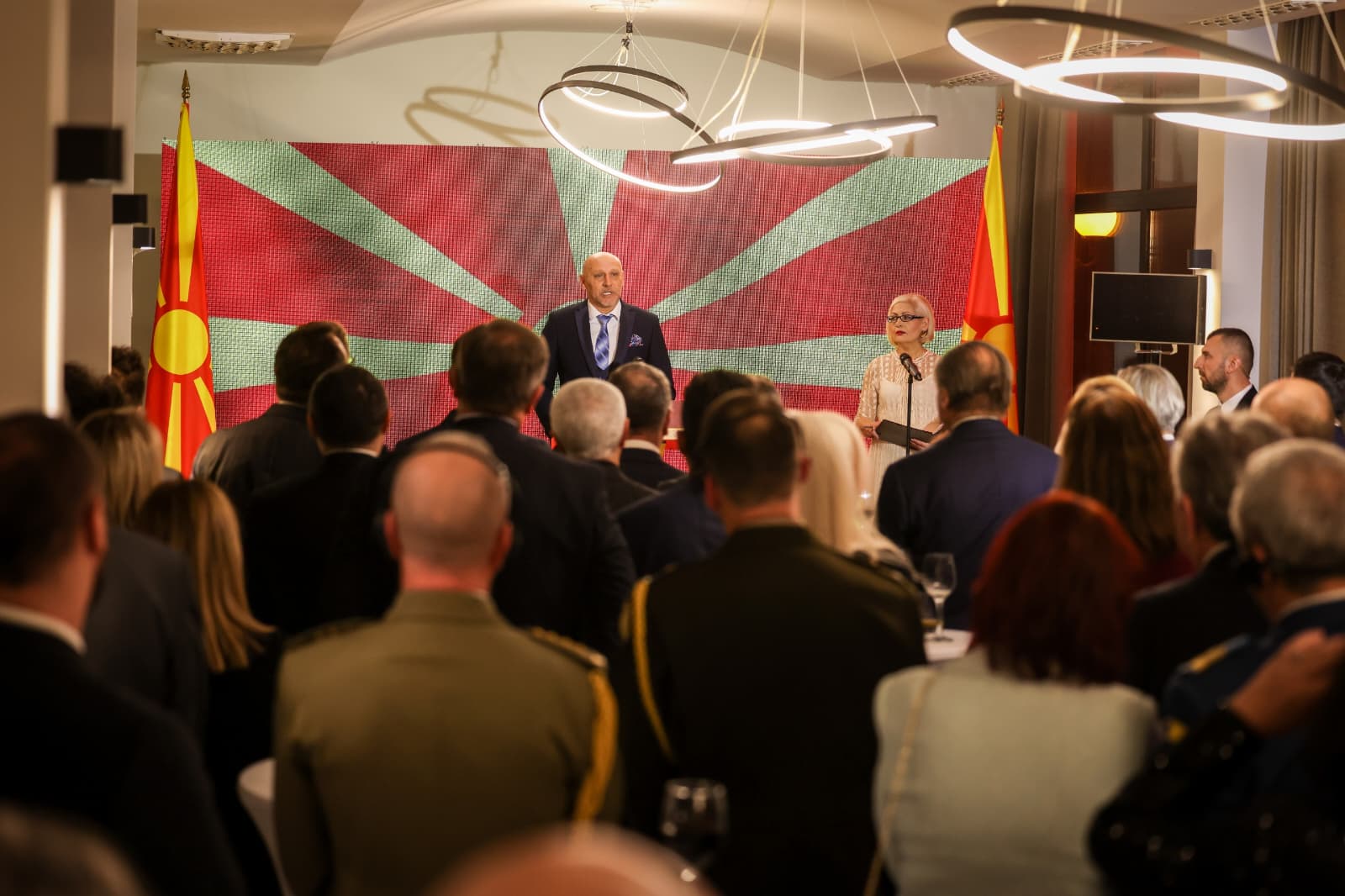
The Dean of the Diplomatic Corps, Ambassador of Bosnia and Herzegovina, Dragan Jakimovic, in his address at the reception, on behalf of all ambassadors expressed gratitude to the President for her open-door policy and continued friendship with the diplomatic community.
Stressing that in our country, diplomats recognize a reliable and constructive partner, Ambassador Jakimovic said that the international community particularly appreciates the state’s commitment to regional cooperation, good neighborly relations and engagement on the international stage.
Addressing the audience, he said that the diplomatic corps will continue to fulfill its duties with dedication, in accordance with the Vienna Convention on Diplomatic Relations, building strong bridges of friendship, both at bilateral and multilateral level.
Dear All,
We live in a new reality – confusing, contradictory and uncertain. The international order is not based on international law, even less on justice, ethics and morality – it openly appeals to power, weapons do not rest, but are activated, the debate on harmony with nature is subsiding, Euro-Atlanticism is not synonymous with a coordinated and solidary alliance! Thucydides and Machiavellians are pushing towards Hobbes, and Kantians and Wilsonians are warning.
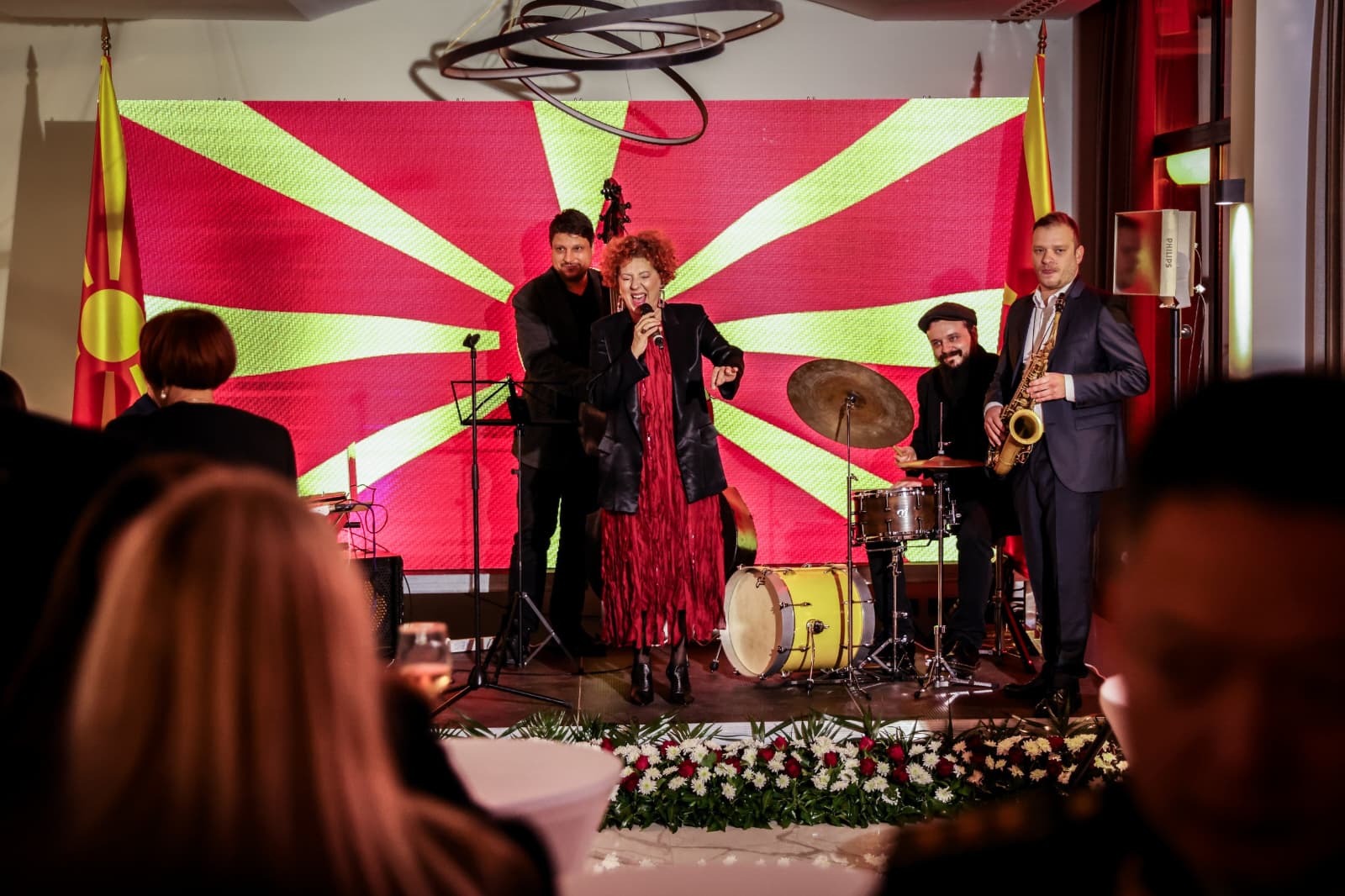
For me, this gathering here in Ohrid for the traditional reception for the diplomatic corps, immediately after Epiphany, is a pleasant moment, held in the spirit of the philosophy of peace, dialogue, understanding and music!
First of all, I would like to wish you all the best, from the bottom of my heart and with good intentions, to you personally, to your families, to your countries and peoples, to your citizens and to all people, regardless of any affiliation.
You, diplomats, personify knowledge, ability, moderation, skills and perseverance in the search for solutions to serious challenges, preferring negotiations, agreements and signatures, rather than conflicts, blackmail and weapons.
For me, your work is not just a protocol, but a practiced and proven civilizational mechanism that has survived centuries because it knew how to demolish walls and build bridges.
In your profession I see the art of the possible, and sometimes the impossible! I prefer Arthurian round tables, rather than maps of fronts and targets of destruction. I believe more in the power of argument, than in the argument of power.
For me, peace is not just absence of war, or its continuation, but a natural state, immanent in the human generic essence.
Your Excellencies,
In the past year, I have had numerous meetings with ambassadors, representatives of international organizations and high-ranking state delegations. I have received credentials from new ambassadors and sent friends off at farewell meetings, always striving behind the formality and diction to see the man and his/her mission, to learn more and directly about the country he/she comes from, to understand him/her and help him/her understand my country, always bona fide!
Each meeting reminded me and convinced me that the international system is not just a mechanical set of norms, institutions, actors and relationships, but inspired and founded on supreme values and principles, around which mutual trust and faith in the humane, good and just were built, carefully, quietly, slowly and with great patience.
My foreign policy agenda in 2025 was coordinated and aligned with the government’s, dynamic and tied to important events, from Rome, Baku and Astana, through Nice, Tirana, The Hague and Seville, to New York, Copenhagen, Venice, Paris and Durres, to name a few.
I am not only mentioning geographical destinations, but also political, cultural and economic challenges for a small European country, which has been struggling for 35 years with the Scylla and Charybdis of democratic transition, consolidation and Europeanization.
Dear international friends,
2025 will remain tattooed in my and our collective memory after the active painful trauma, the tragedy in Kocani. We still stand before the Kocani mirror, in search of responsibility and re-examination.
But if friends are recognized in trouble, allow me to thank you once again for the solidarity and help, whose messengers were you.
Ladies and gentlemen,
I admit that although I had serious scientific doubts about Fukuyama’s theses about the “end of history”, in the sense of the final victory of liberalism and the end of the contradiction between freedom and equality, as well as Huntington’s theses about the inevitable clash of civilizations, I did not believe that the time would come so soon when the questions I thought an adult humanity had long ago overcome and closed would be reopened: wars, militarization, new arms races, hybrid threats, cyber-attacks, disinformation, authoritarianism, brutal realism.
It turned out that if you do not nurture and protect it, you will quickly realize that peace is a fragile plant and/or a romantic naive human idea, the most desired New Year’s wish and the greatest hope.
The seven most powerful, which guarantee world security, unfortunately, did not always act in line with the Charter and the most important international documents, and the rest, those in the General Assembly, did not always react loudly and decisively, allowing the United Nations to become disunited, multilateralism to transform into multipolarism, with strong elements of a new cold war, which brings back memories of the League of Nations.
Lex is not rex, and ethics and morality have become ‘outdated and old-fashioned phenomena’. The legal is less and less just, and the just rarely becomes legal.
Small states, like mine, have best understood international politics as a force from their own experience. They are most often the first and most aware of the difference between principles, words and reality. But, in the anarchic international system, in the absence of checks and balances, limited and unsanctioned power tends to grow, and even the relatively strong becomes weak in relation to the super strong!
Therefore, small states, together with medium-sized ones, must be the most vocal supporters of multilateralism in an era of rampant multipolarism, old-new goliaths, and even neo-unilateralist geopolitical, economic and energy dominance!
Your Excellencies,
Last year, we were also a credible EU partner, a responsible, active and credible member of NATO, a proven factor of stability in the region.
We cannot be Penelope who, waiting for Odysseus, is constantly changing the constitution, at the request of someone from the outside, forgetting that it is a law above laws, or lex superior, which should be changed rarely and with a trembling hand, as the Belgian professor Vigny said, as well as the most important social contract of Macedonian citizens, as Rousseau wrote.
Is it possible, i.e. is it not hypocrisy and cynicism to invoke national constitutional patriotism and consensus as a barrier against changing the EU’s constitutive acts, and to demand from a country to fulfill ‘just one more condition’, to make ‘just one more concession and constitutional change’, because that is what the neighbor wanted, that is what the rapporteur or the European Council recommended!
It is difficult to live in permanent uncertainty. It is strange to invoke the Copenhagen criteria, and to insist on Balkan demands, to expect reforms and the rule of law, and to tolerate bilateralization, vetoization and double standards.
Democracy is learned from and with democrats. Trust is built through understanding and assistance, not through conditioning and blackmail.
Dear friends,
We are at a crossroads. The cure is in reforms: Macedonian, Balkan, but also those of the UN, NATO and the EU.
We are all facing a Hamletian dilemma: to be or not to be!
We need a new impetus for multilateralism: a multilateralism that will defend the Charter and international law, that will protect the small, the weak and the vulnerable, that will build climate and energy security and that will not allow justice to become the privilege of the strong.
In a world dominated by strong men with weapons, we need strong women with wisdom.
Ladies and gentlemen,
We are faced with real military risks, but also with climate, energy and economic shocks.
Therefore, security is no longer just a question of geography and territory, but also of the resilience of institutions, the stability of society and the trust of citizens.
We are aware that we must invest in defence, but also in crisis management, in institutional resilience and in infrastructure connectivity. Therefore, Corridor 8 is not only an economic project – it is also a security priority.
In the renewal of the Greek-Macedonian energy connection, there is not only an economic rationale, but also a strategic approach in terms of overcoming political vulnerability. The partnerships we are opening and the talks we are conducting are aimed at diversification, stability and sustainable development.
Your Excellencies,
Diplomacy is not only national and traditional, but also cultural, economic, sports, scientific.
Culture is a bridge that politics does not always manage to build. It creates trust where words are careful and interests differ.
We are a small country, but a culturally and spiritually competitive actor.
For us, as for all of you, identity is not an argument against the EU, but an argument for the EU, because Europe is rich precisely because of its diversity.
We want to be recognized not only in economics and politics, but also in knowledge, education, science, culture, sports.
How many times have we proven that we can be a partner that personifies values, not problems, although you constantly treat us as problematic.
Dear friends,
Let me end with a simple but essential message.
The Macedonian citizens, regardless of their affiliation, need a state governed by the rule of law, a state with strong institutions and respected procedures, with a Weberian administration that serves, not rules, with young people as valuable social capital, not as a statistical figure of emigration, with the diaspora as the second wing of the homeland.
We can be both Homo Balkanicus and Homo Europicus: when we want and when you want. But for that we need a common will: not only ours, but also the neighboring, regional and European ones.
Enlargement is not a test only for the candidates, but also for Europe’s democratic capacity and credibility. If the rules apply differently, then they are an instrument of political arbitrariness.
Finally, the Western Balkans is not a problem of the Union’s absorption capacity. On the contrary, the integration of the region is a matter of security, stability and geopolitical rationality in a time of growing geopolitical rivalry.
We have no problem talking. On the contrary – we are a people and a state that live with the reality that neighborhood is not a choice, but a destiny. Sometimes, when I am disappointed, I say: it is not by chance that we live next to each other or with each other – it is a clear message that we share not only a common reality, but also a common future.
Precisely because of this, the responsibility is double – ours and Europe’s. Good neighborliness must not be an alibi for a blockade. Dialogue must not be turned into an instrument of conditionality. The European process must not be turned into an arena in which the bilateral will dictate the European.
We must learn lessons from the experience we have so that we do not inspire and provoke in the future a similar behavior of anyone who enters the European Union towards the candidates, writing sad Balkan stories.
If enlargement becomes a mechanism in which each new member gets the right to ‘redefine’ the path of the next, then the Union will lose what makes it a Union: the principle of legal predictability and equality.
The question arises: is the European integration a process that Europeanizes the candidates, or a process that risks balkanizing the European enlargement policy?
We are not asking for special treatment. We are not asking for privilege.
We demand that enlargement be returned to where it belongs: within the framework of the Copenhagen criteria, within the framework of meritocracy, within the framework of reforms and the rule of law.
Only in this way will the European perspective remain credible. Only in this way will hope remain rational, not sentimental. And only in this way will the EU win the battle for an inspiring, respected international actor.
Only together can we overcome the dangerous political tendency to treat the so-called Western Balkans as a periphery of the periphery, as a strange place with an even stranger name, and not an integral part of the European political architecture.
Finally, I thank you for your cooperation, for your support, for your partnership, not only in good times, but also in difficult times.
I wish you a successful diplomatic year, peaceful and fruitful work, meetings in which we will build trust and a common future.