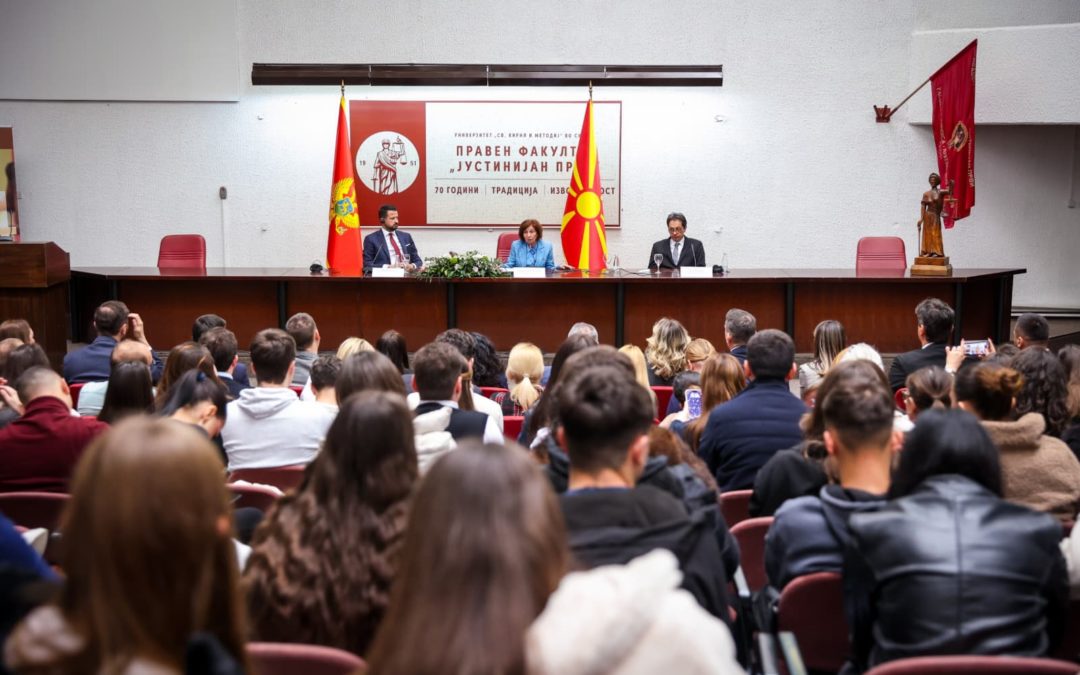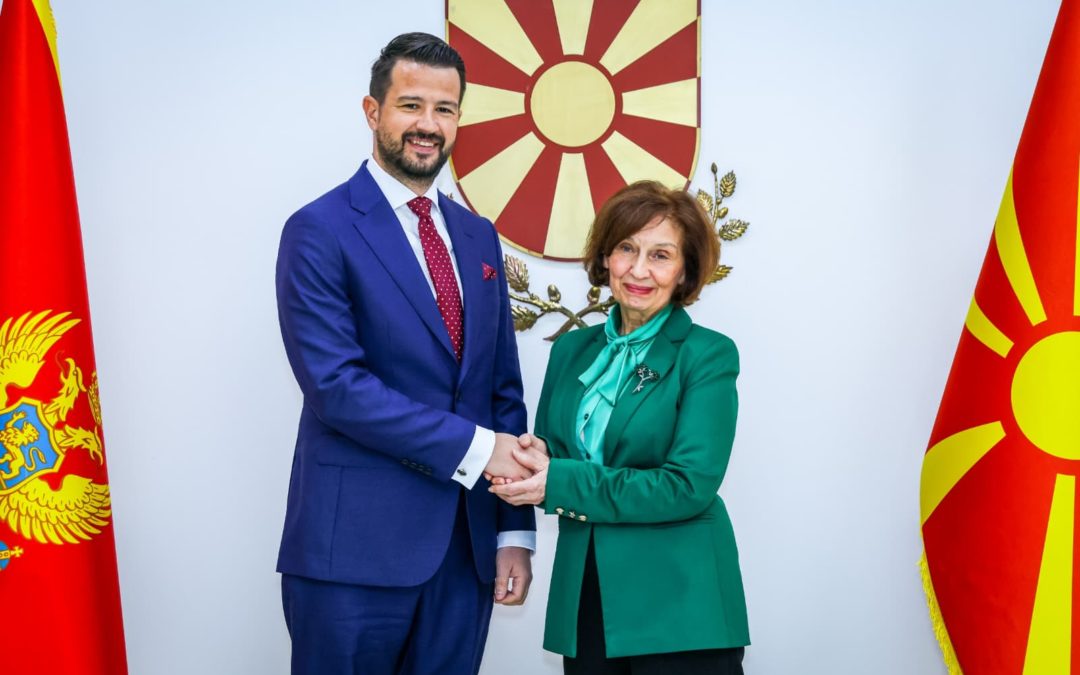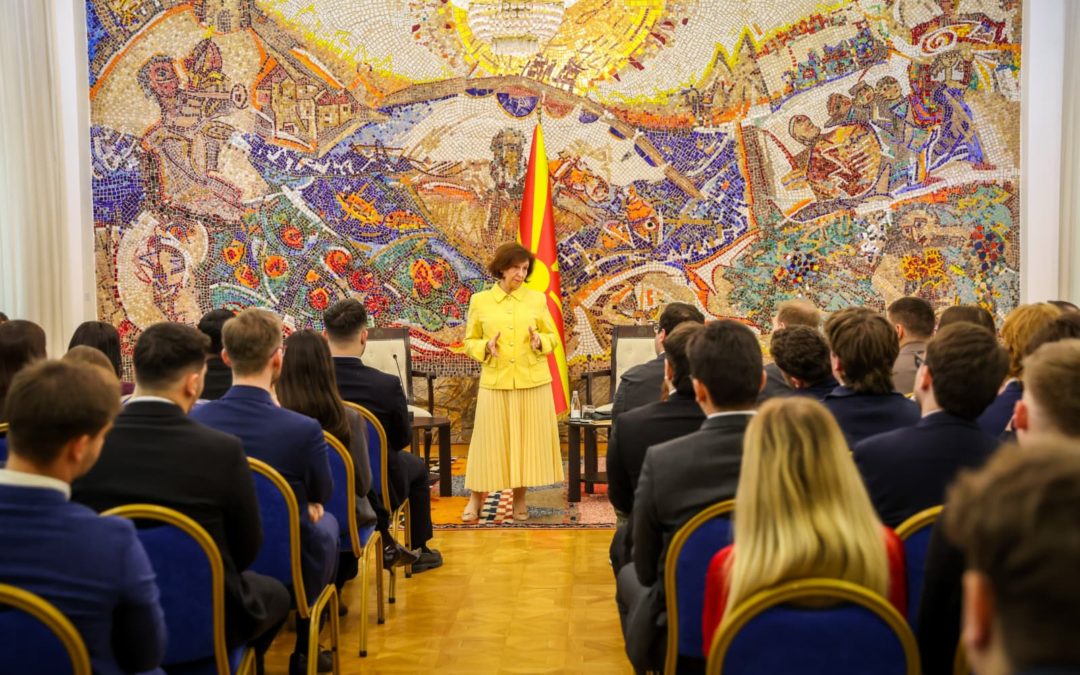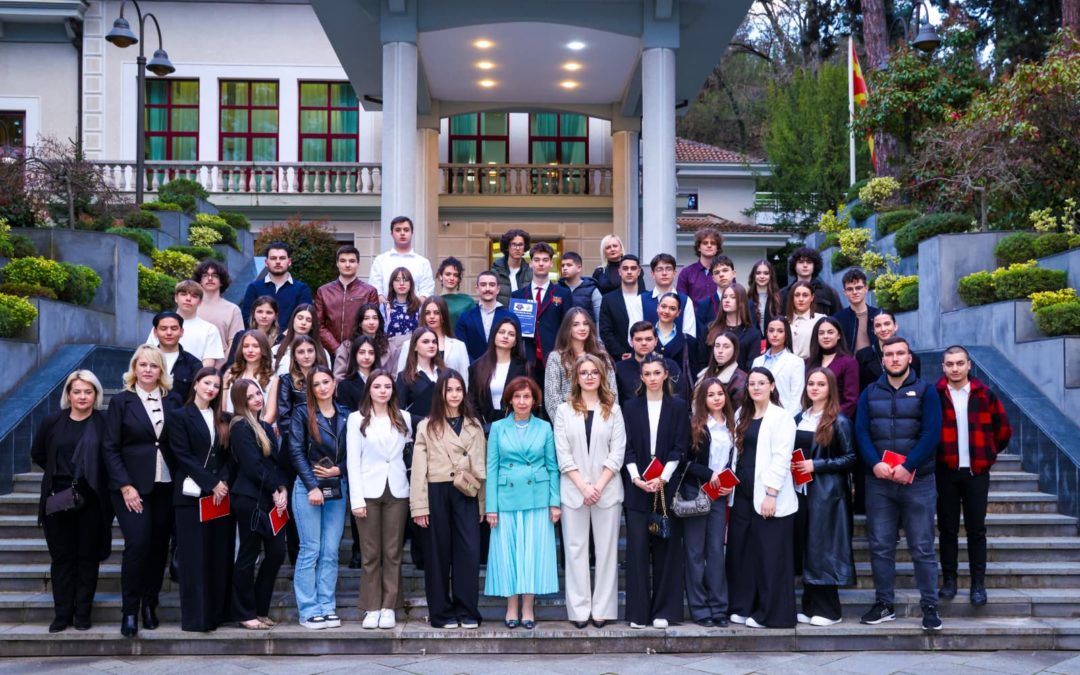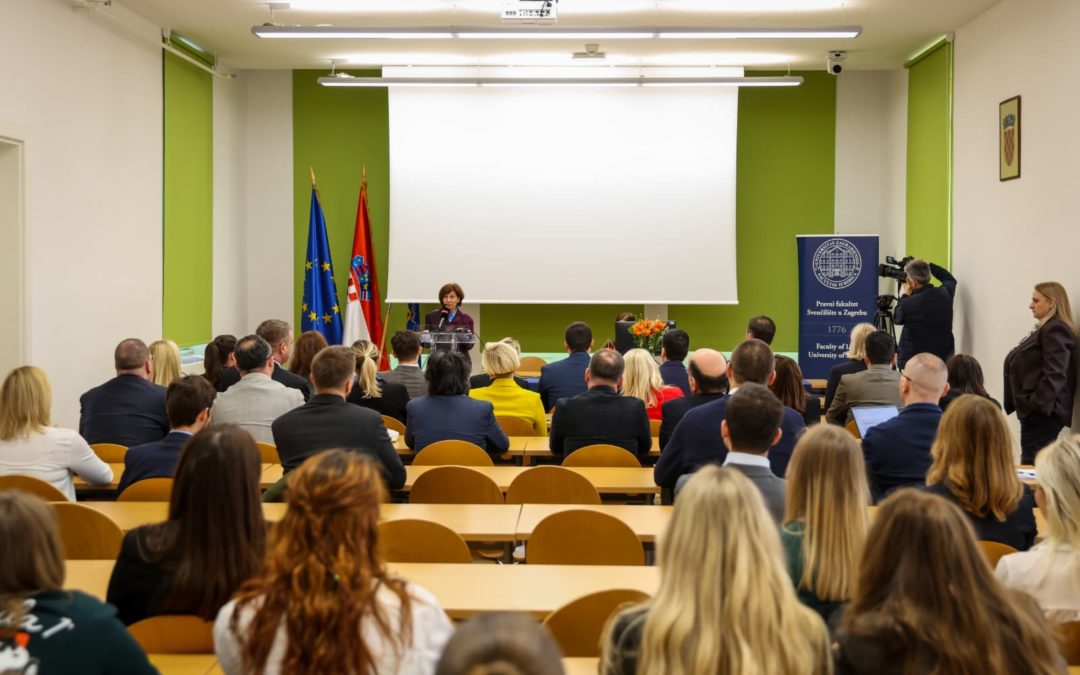
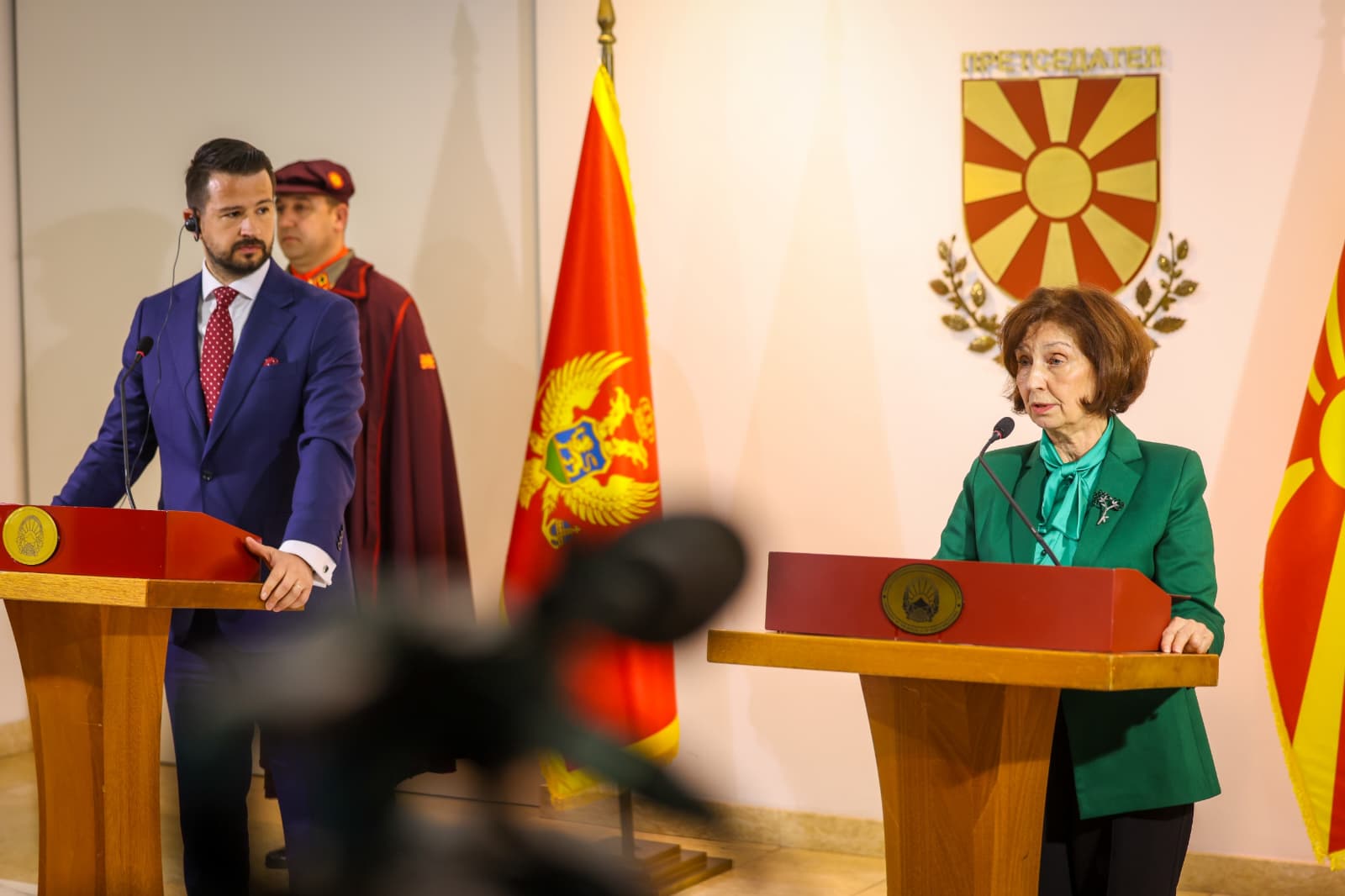
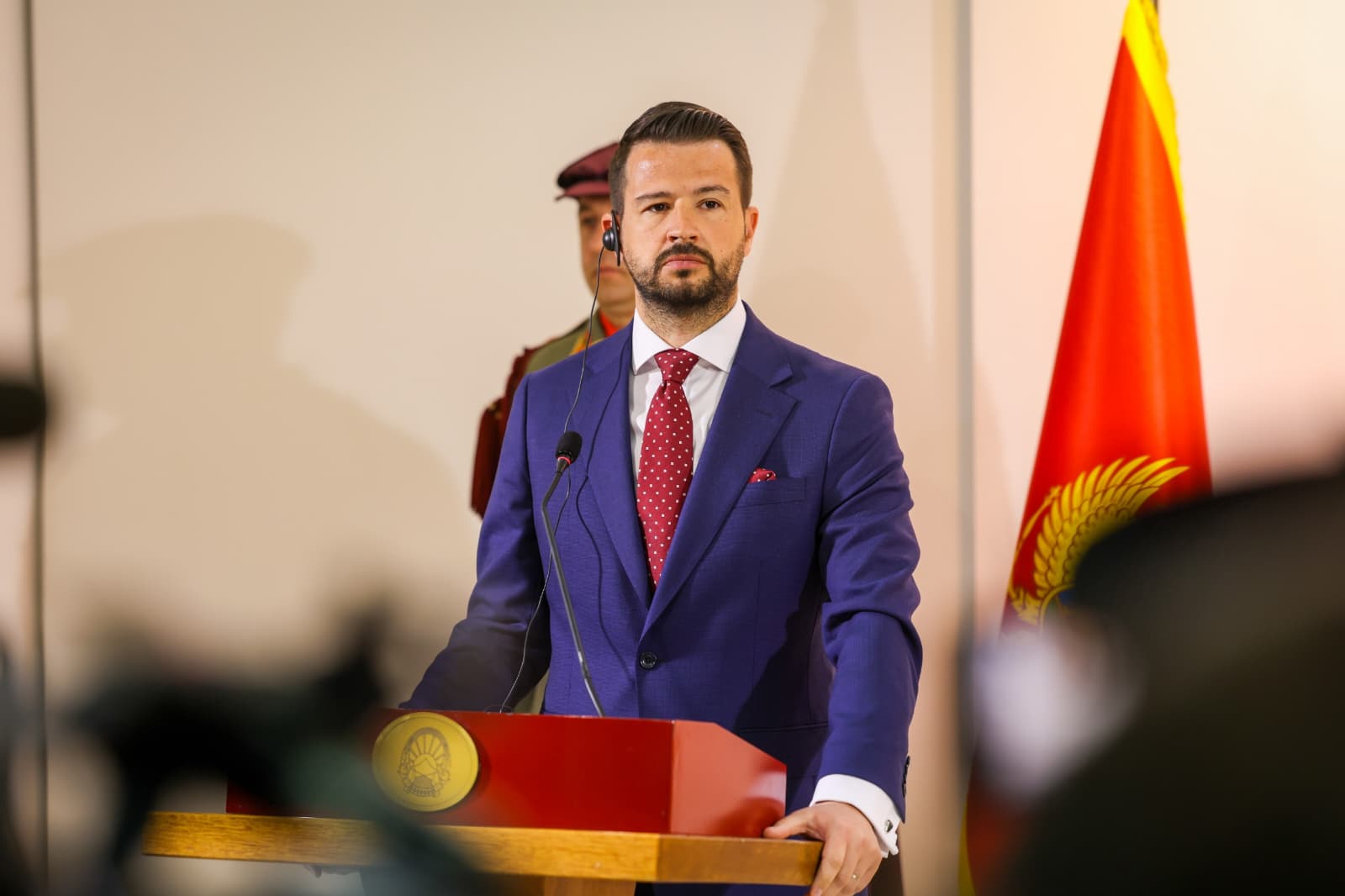
As part of the official visit of the Montenegrin President, President Gordana Siljanovska-Davkova and President Jakov Milatovic held a joint press conference.
Below is the integral statement of President Siljanovska-Davkova:
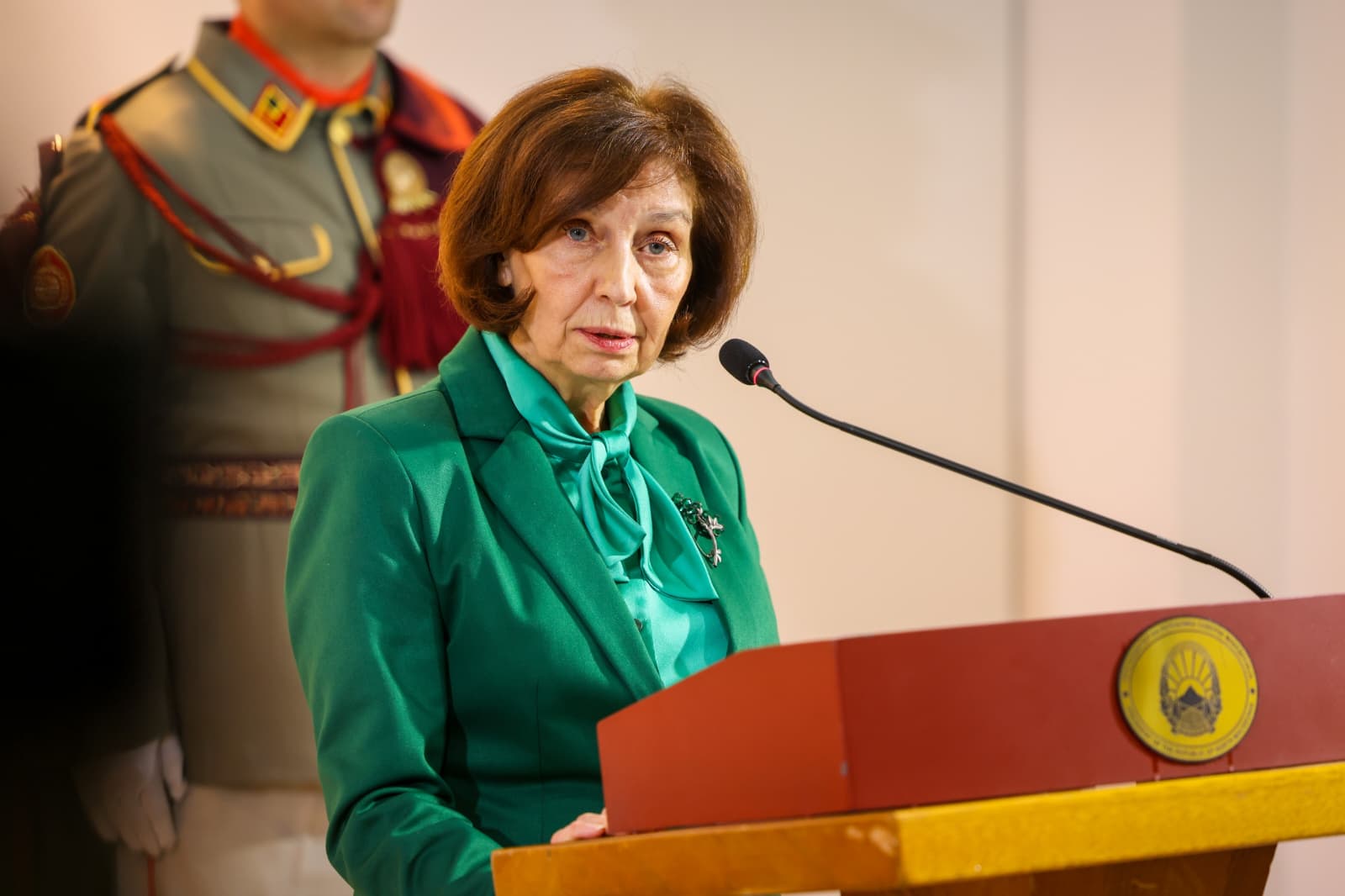
Distinguished media representatives,
Dear President Milatovic, welcome,
This meeting is taking place on the eve of the 20th anniversary of the establishment of diplomatic relations between the two countries, an important and a happy event to celebrate, but I must say, we are also marking 20 years since we received our candidate status for membership into the European Union. I am glad to receive the President in a return official visit.
Today, once again, we confirmed that we are an outstanding example of regional good neighborliness, a good example of cooperation, internally, within the framework of the NATO alliance, and today’s meeting further strengthens trust.
What was new, important and inspiring for both of us today was the signing of the Memorandum of Cooperation between the Youth Councils, and I expect this Memorandum to bring freshness and creativity to our relations.
As for the economic cooperation, Mr. Milatovic is far more knowledgeable than I am, but I think that these modest USD 61.8 million must be increased and there is room for that in construction, in tourism, in energy, perhaps also in the reopening of the Podgorica-Skopje or Tivat-Skopje airline, since both countries have high hopes for tourism.
Wherever I go, and we have met with Mr. Milatovic many times, after many multilateral events, I always recognize in him a competent, credible and respected interlocutor, whose views are important to me and I value them. Our common vision is a stable and prosperous region, integrated into the European Union.
Today, the Montenegrin President pointed to an event that will happen, and it is historic, the holding of the European Union – Western Balkans summit in Montenegro, which makes sense with the fastest progress of Montenegro on the path to the European Union. I welcome it, support it and I think that it will be proof that the issue of membership of the Western Balkans is no longer just a question related to the future, but is an issue that should and can become a reality. Of course, our cooperation will continue in the model of negotiation, the opening of clusters, the closing of clusters and chapters. I know that Montenegro is doing this excellently. Of course, today I reaffirmed the principle that I did not invent, nor did anyone from here create it, the principle or principles established in the distant 1993, known as the Copenhagen criteria. I call for our progress towards the EU to be within the framework of what is called European constitutional law. It is very important, because, if a precedent is nurtured, it will open or create fertile ground for new precedents. There is no European law on minorities. There are countries in the EU, very large ones, that have not even signed the Framework Convention for the Protection of Minority Rights. There are countries in the EU, most of which do not have a single word in their constitutions about minorities, they only have an anti-discrimination clause that all people are equal regardless of any affiliation, including ethnicity.
I insist on equal standards.
What is new in our path was the statement of the President of the European Council in Sofia, Mr. Antonio Costa, about the need for guarantees given the impossibility of predicting what may appear in the future as a condition beyond the Copenhagen criteria and beyond what the European Union has established in the basic document, called the Treaty on European Union: it will respect the national and cultural identity of each nation and state, the dignity and integrity of each citizen, as well as the constitutional and political structures of the states. Failure to comply with these guarantees could lead to proceedings being initiated before a court in Luxembourg. Of course, we cannot initiate such proceedings.
What is new for us is what Mr. Waitz is asking the Legal Service of the European Council to interpret the nature of the protocol, or rather the minutes, which have become an integral part of the negotiating framework and the conclusions. I think that this request is overdue, but any request for legal interpretation is good. I think that even during the discussion of the negotiating framework and the conclusions, the basic principles and values of the European Union should have been taken into account, because the European Union is not, as Mr. Macron rightly says, a political and bureaucratic machine, but a philosophy, and there is no philosophy without values and principles.
We believe that the full integration of the Balkans is necessary for the EU to truly be a community, and not just a political system, but a community that inspires and is complete. What we both think and should be emphasized here is that we both regret the cancellation of the Brdo-Brijuni Summit. During these summits, there is always both a desire and a willingness to exchange views and opinions and to propose common solutions. But I do not allow myself to comment on the reasons. I would like to say that regional cooperation is not only our obligation, but also a right and that mutual support of the countries of the Western Balkans is, for me, imperative. Mutual understanding will lead us to the European Union faster. Conversely, if there is no willingness among us to understand, respect and support each other, then we ourselves make the path to the European Union more difficult.
Thank you.