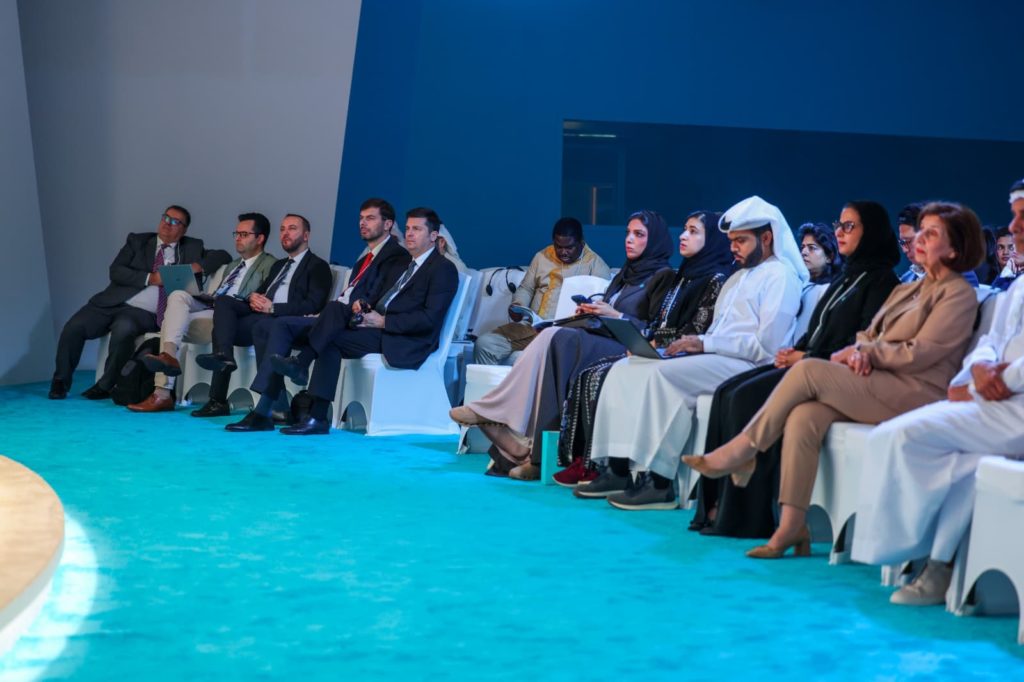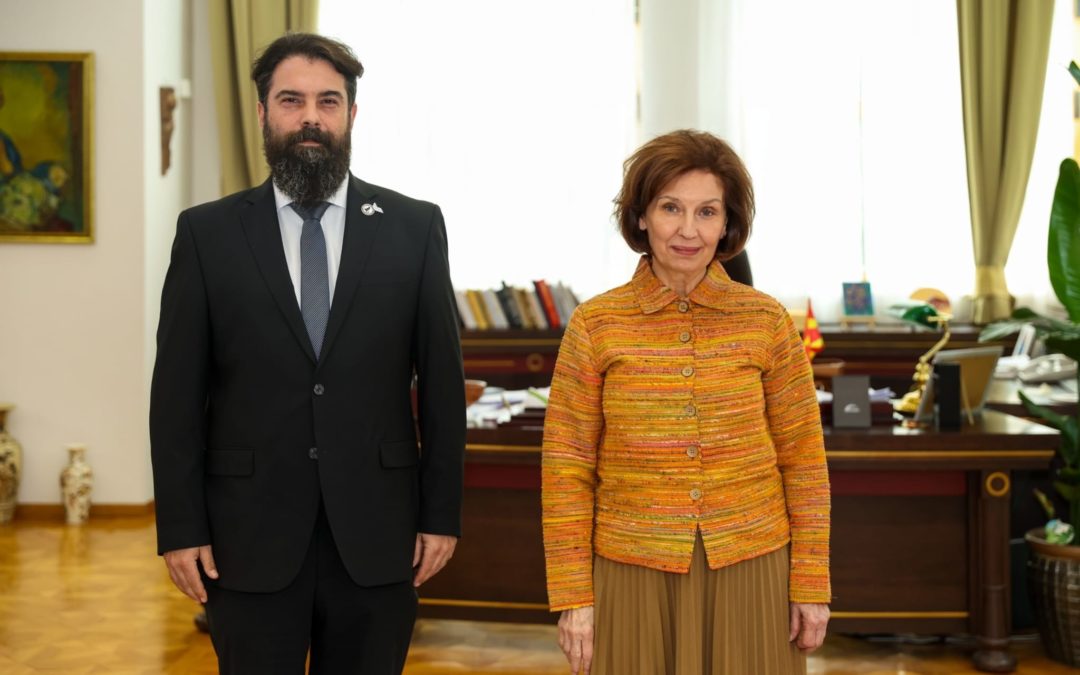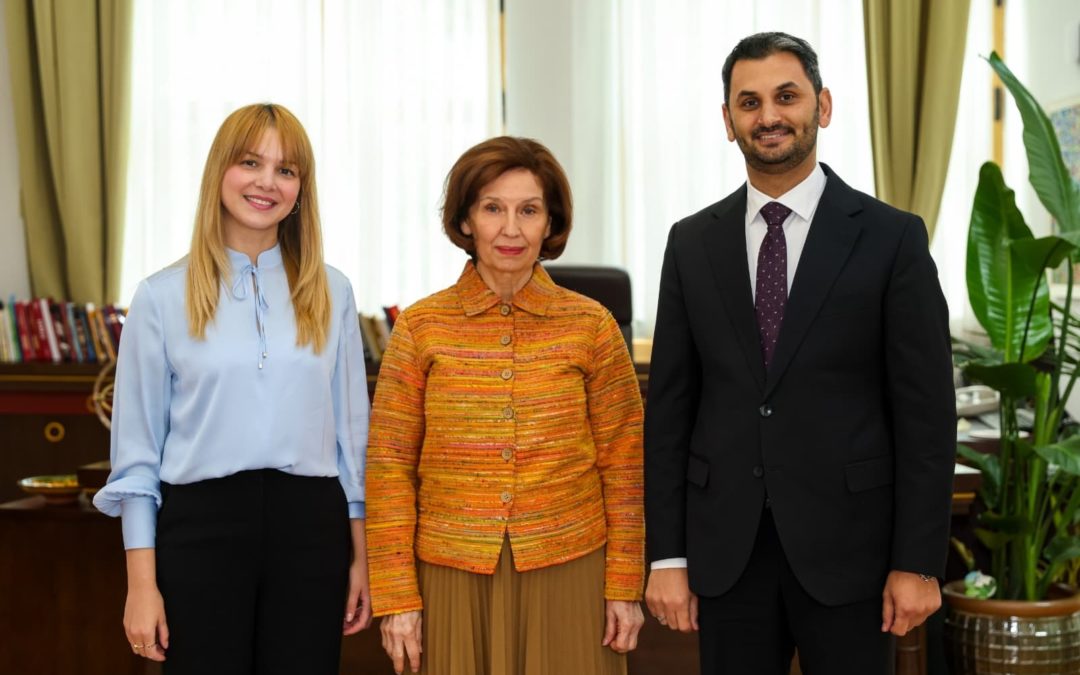
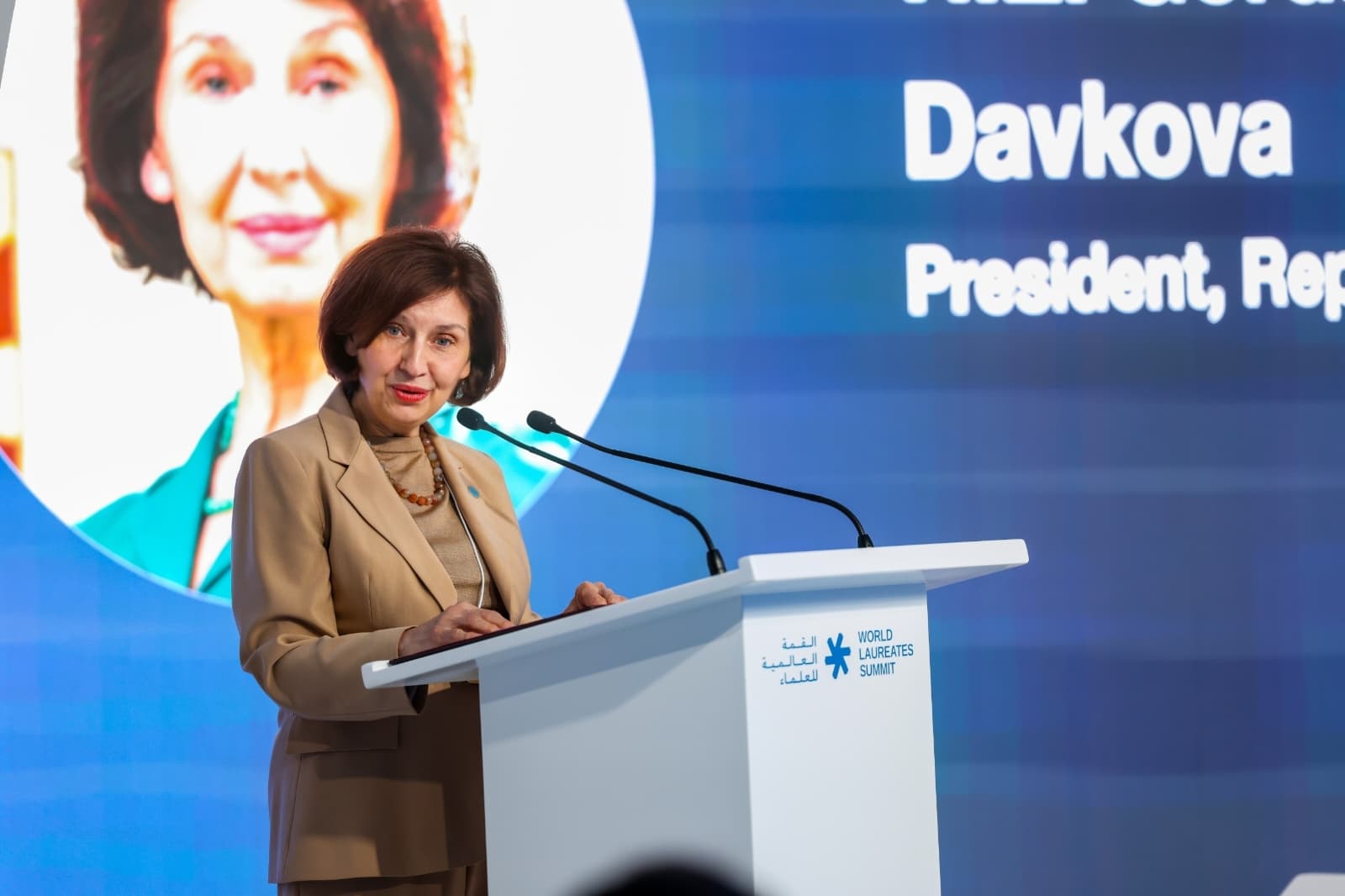
Change in the world requires a change in education, seeing reality through the eyes of new generations, said President Gordana Siljanovska-Davkova in her address to the World Laureates Summit, which is being held today in Dubai, on the eve of the World Governments Summit.
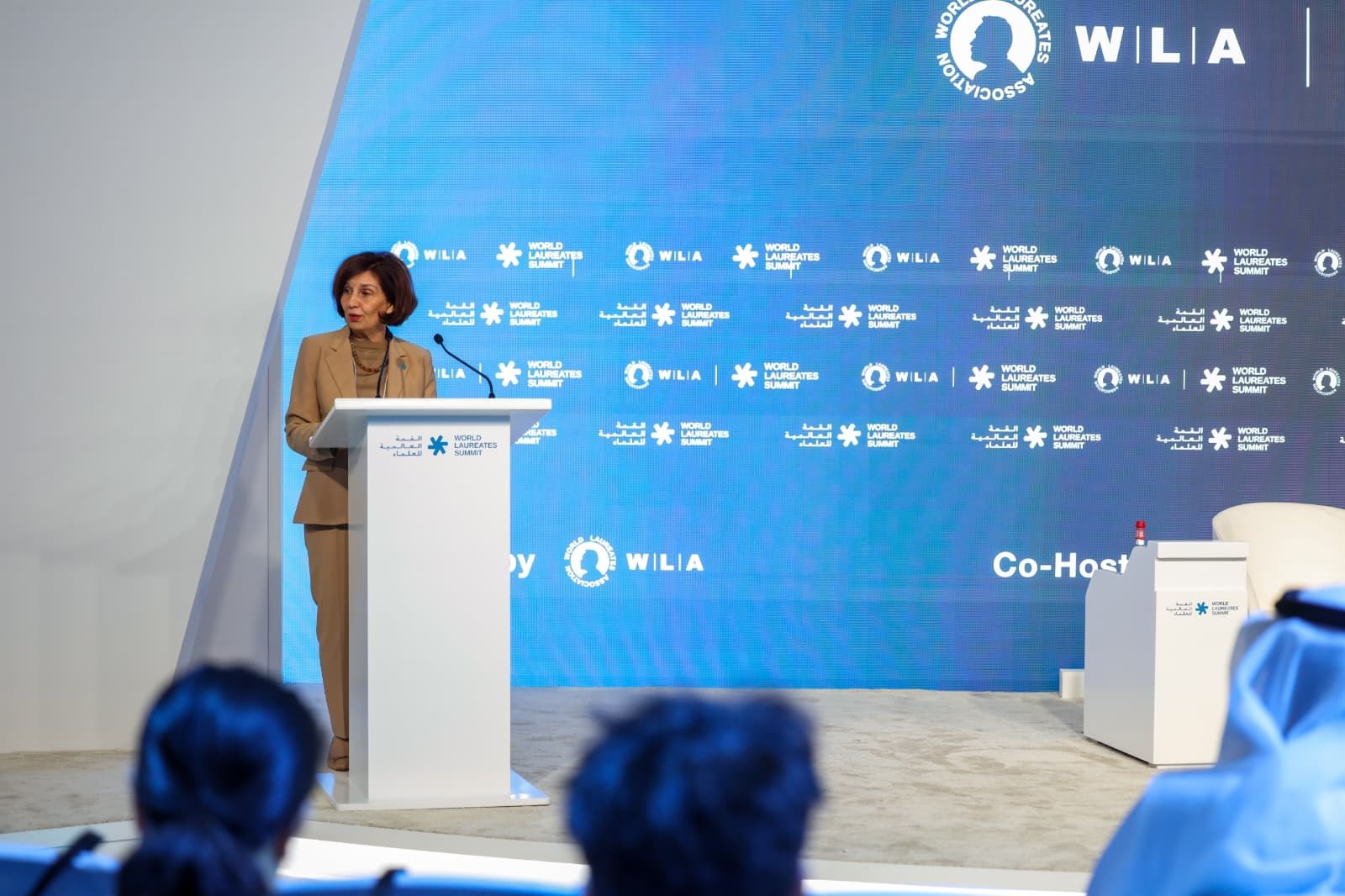
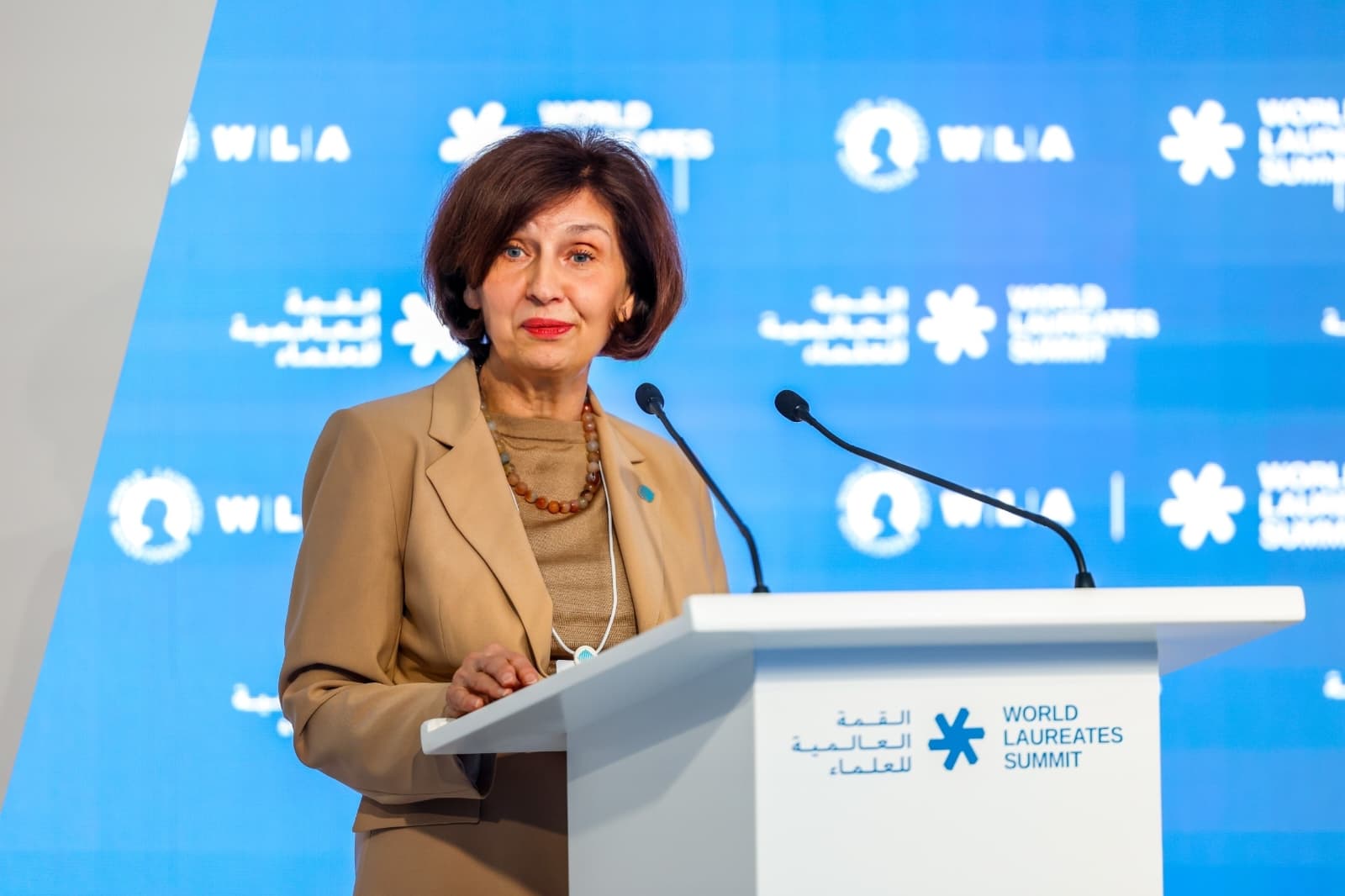
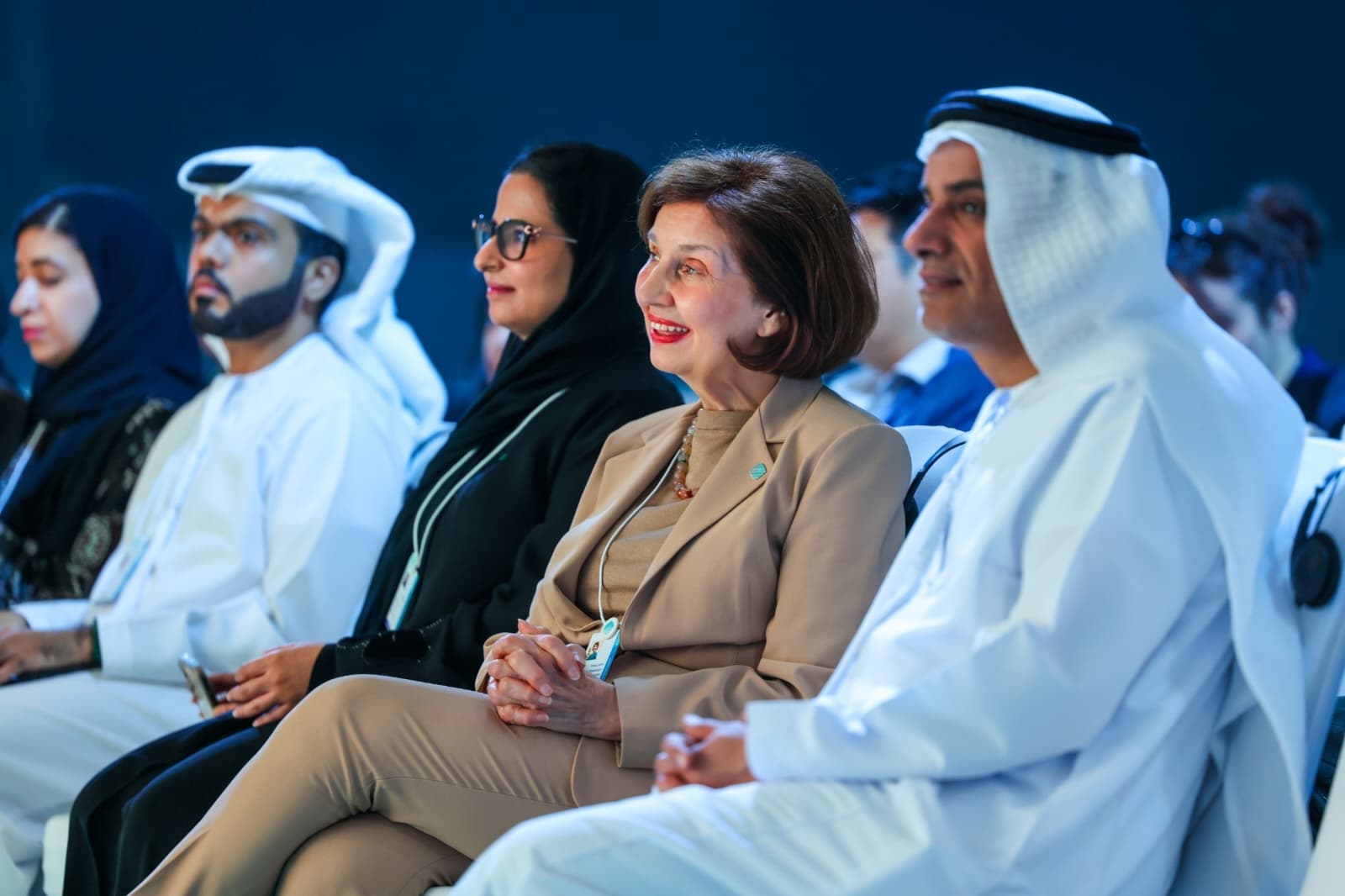
At the eminent gathering, attended by around 150 top scientists, including Nobel laureates and leaders of research institutions from around the world, Siljanovska-Davkova said that in a time of rise of artificial intelligence, education is no longer a one-way street of transmitting and memorizing facts and pointed to the need for the focus of education to shift to critical and creative thinking.
“Artificial intelligence is part of the new model of education. It cannot and should not be banned. However, it should be regulated, as it carries numerous risks, including addiction”, the President said.
According to her, education must start focusing on mental stability, emotional intelligence and ethical and moral reasoning, which artificial intelligence lacks.
“We need a global consensus that artificial intelligence in education and in everyday life must be transparent, fair and human-led. Artificial intelligence must be a tool, not a master”, Siljanovska-Davkova said.
The President believes that a paradigm shift is also needed in the Macedonian education system.
“I believe, in science, there are no small and big countries, but only small and big ideas. We have people with great ideas. We have chemists and physicists who are among the top 2% of the most cited scientists globally. We have women in STEM who surpass regional and European levels. We have talent and potential, but we cannot do it alone. We need your support, ideas and most importantly, your advice. The Macedonian Academy of Sciences and Arts, our universities and faculties are open to cooperation in research and development projects from which we could all benefit”, the President said at the Summit.
Below is the integral text of the address of President Siljanovska-Davkova:
Esteemed Laureates,
Ladies and Gentlemen,
It is an honor to be among some of the most brilliant minds of our age. Your lifework is a testimony that the greatest achievements in the world begin with one thing, and that is a curious mind. By seeking truth, curiosity leads to discovery, and discovery to progress.
But curiosity is nurtured by an environment that allows it to breathe. Sadly, for many students today, education does not create such an environment. Instead of a spark that turns into a creative fire, education has become a mold for mass production of diplomas. This is due to the fact that we are standing at a crossroads.
On one side, we have the old Prussian model of education that was designed two hundred years ago for the linear world of the First Industrial Revolution. It was built for the factory line and the military barracks, focusing on standardization instead of creativity and obedience instead of inquiry. It treats students like tabula rasa, waiting to be filled with standardized facts.
But the world has dramatically shifted. We already live in the Fourth Industrial, Digital Revolution, a dynamic symbiosis of the physical, digital and biological worlds. This is an era of smart systems that make independent decisions to achieve perfection in production. While the old world was somewhat rigid and linear, our world is interconnected and digitalized.
A shift in the world requires a shift in education. This requires looking at reality through the eyes of the new generations.
Most of us here belong to the analogue generation, but the students in our classrooms are part of the digital, audiovisual Y and Z generations. These are children who use iPads before they can even walk or speak. They swim through the internet like fish in the sea. To them, a world without digital connection is unimaginable.
This creates a mismatch. We are an analogue leadership trying to manage a digital generation. These young people are not looking for long, ex cathedra lectures or books of a physical library. They have the global digital library in their pockets. They are learning differently. They are taking online courses from the best universities in the world and are watching short tutorials that explain complex concepts in couple of minutes. They aren’t just changing what they learn, but also how they think.
Education is no longer a one-way street. It is no longer just the teacher speaking to the student. It has become a trialogue. It is now the teacher, the student, and Artificial Intelligence. This new “neural network” of education is unavoidable. We used to think education was about “downloading” facts into a brain. However, a smartphone can hold more data and facts than all of us combined ever could.
This means that the focus of education must shift from memorizing to critical thinking. According to the World Economic Forum’s “Future of Jobs Report”, 50% of all employees will need reskilling by the end of this decade. The most valuable skills are not memory or obedience, but analytical and creative thinking.
Artificial Intelligence is part of the new model of education. It cannot and it should not be banned. However, it should be regulated, because it comes with risks, the greatest of them being dependency. History shows us that when few have monopoly on knowledge, then many are left behind. Let me borrow an illustration from literature.
In Umberto Eco’s famous novel “The Name of the Rose”, the medieval monastery is a symbol of the old feudal state. The Dominican monks, who are keepers of knowledge, represent a high-class intellectual elite, while the illiterate peasants are the serfs who live in ignorance and dependence. While the elite feasts, the serfs eat the leftovers. Yuval Noah Harari warns us that unregulated Artificial Intelligence can create a new digital peasantry: the consumers. If we draw a parallel to Yannis Varoufakis’ concept of Technofeudalism, we will see today’s “Cloudalists” replacing the old feudal lords while the digital consumers are the “cloud-serfs”. And, just as the monks used the labyrinthine library to hide their secrets and preserve the status quo, modern technology lords use codes and algorithms to control behavior. If we are not careful, our societies will become a sharp wealth pyramid. A tiny minority at the top will own the algorithms and the robots, while the vast majority at the bottom will have no power or relevant skills. This leads to inequality, job loss, and social injustice and unrest.
But this dark future is not inevitable. I believe that the antidote is how we redefine education. If Artificial Intelligence knows us better than we know ourselves, education must stop focusing on information, which AI has, and start focusing on mental stability, emotional intelligence, and ethical and moral discerning, which AI lacks. We need a global consensus that AI in education, and in everyday life, must be transparent, fair, and human-led. AI must remain a tool, not a master.
This brings me to the theme that relates to everyone in this room. Whether you are an economist, a physicist, a chemist, or a physician, each and every one of you is driven by curiosity. Some of your discoveries have brought the greatest benefits to humankind. And, with your examples, you can help us put curiosity in the very core of the educational system.
We need this paradigm shift, including in the Macedonian education system. The Macedonian education model, unfortunately, still operates under the old paradigm. This results with low PISA results and a loss of the potential. But, I believe that, in science, there are no small and big states, only small and big ideas. We have people with great ideas. We have Chemists and Physicists who are in the top 2% of most quoted scientists globally. We have women in STEM often surpassing the regional and even European levels.
We have talent and potential, but we cannot do it alone. We need your support, ideas, most importantly, your advice. The Macedonian Academy of Sciences and Arts, our universities and faculties are open for cooperation in research and development projects that could benefit us all.
Thank you.