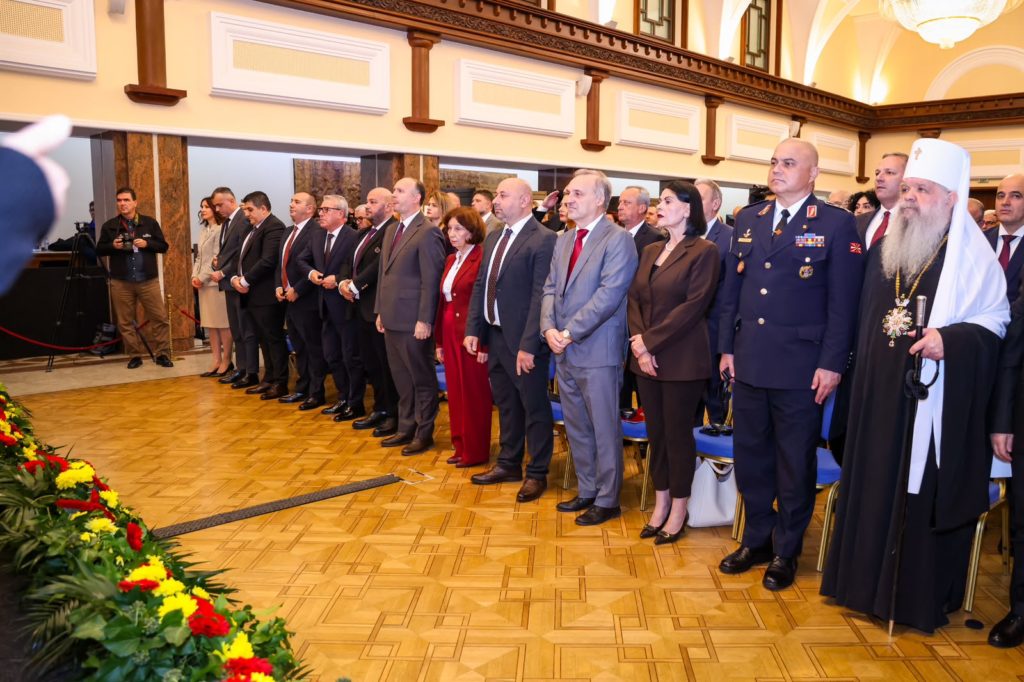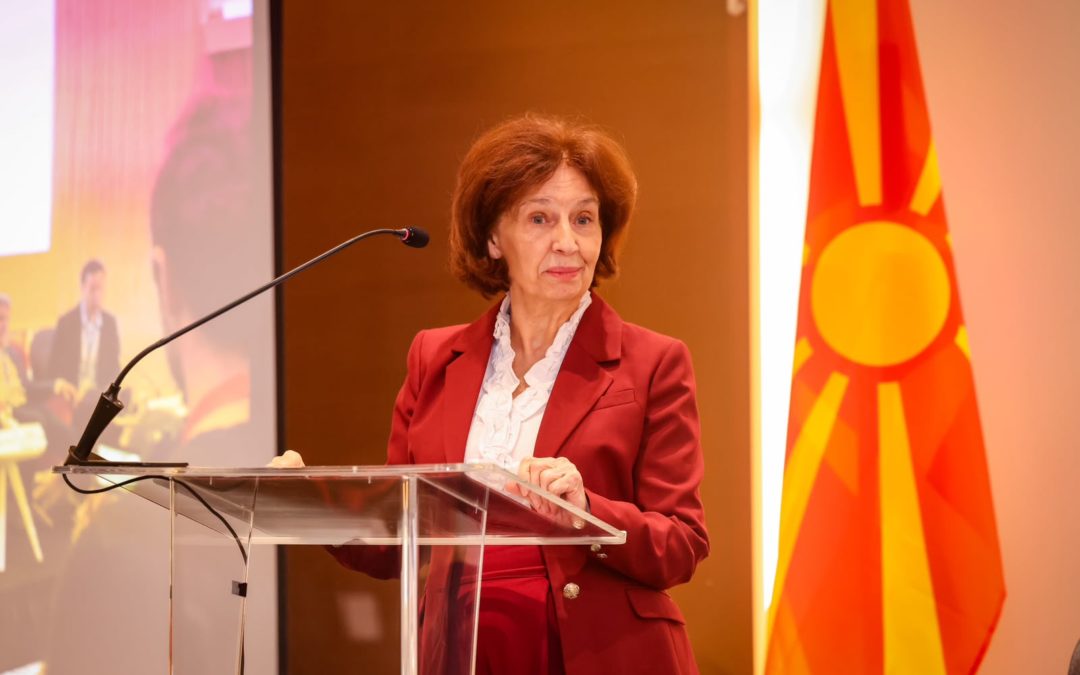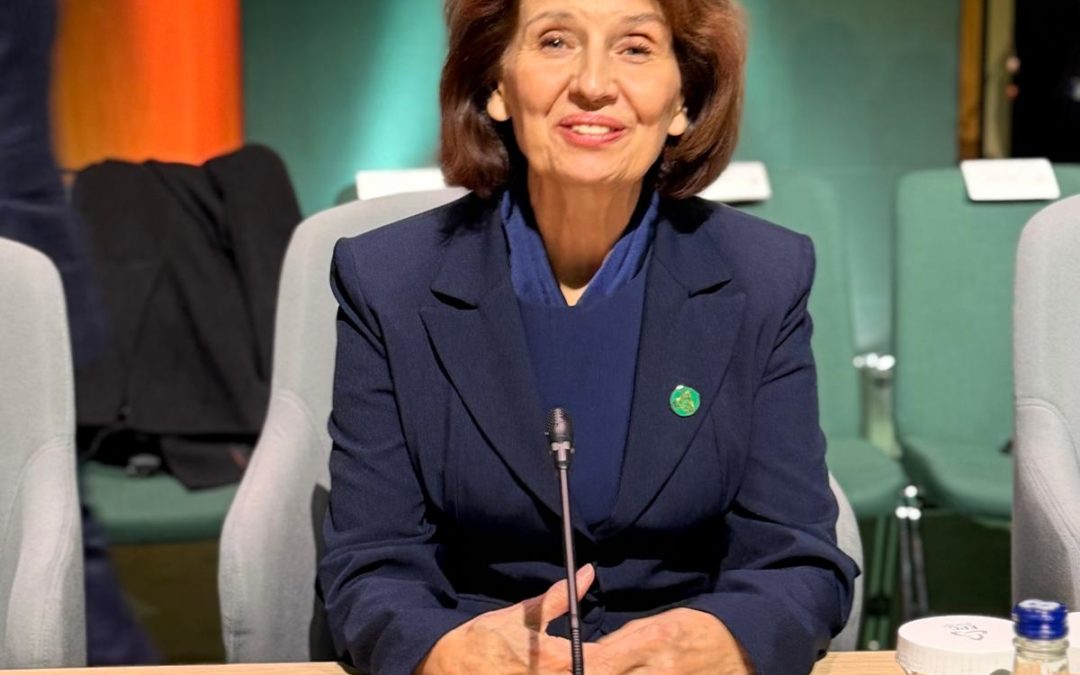
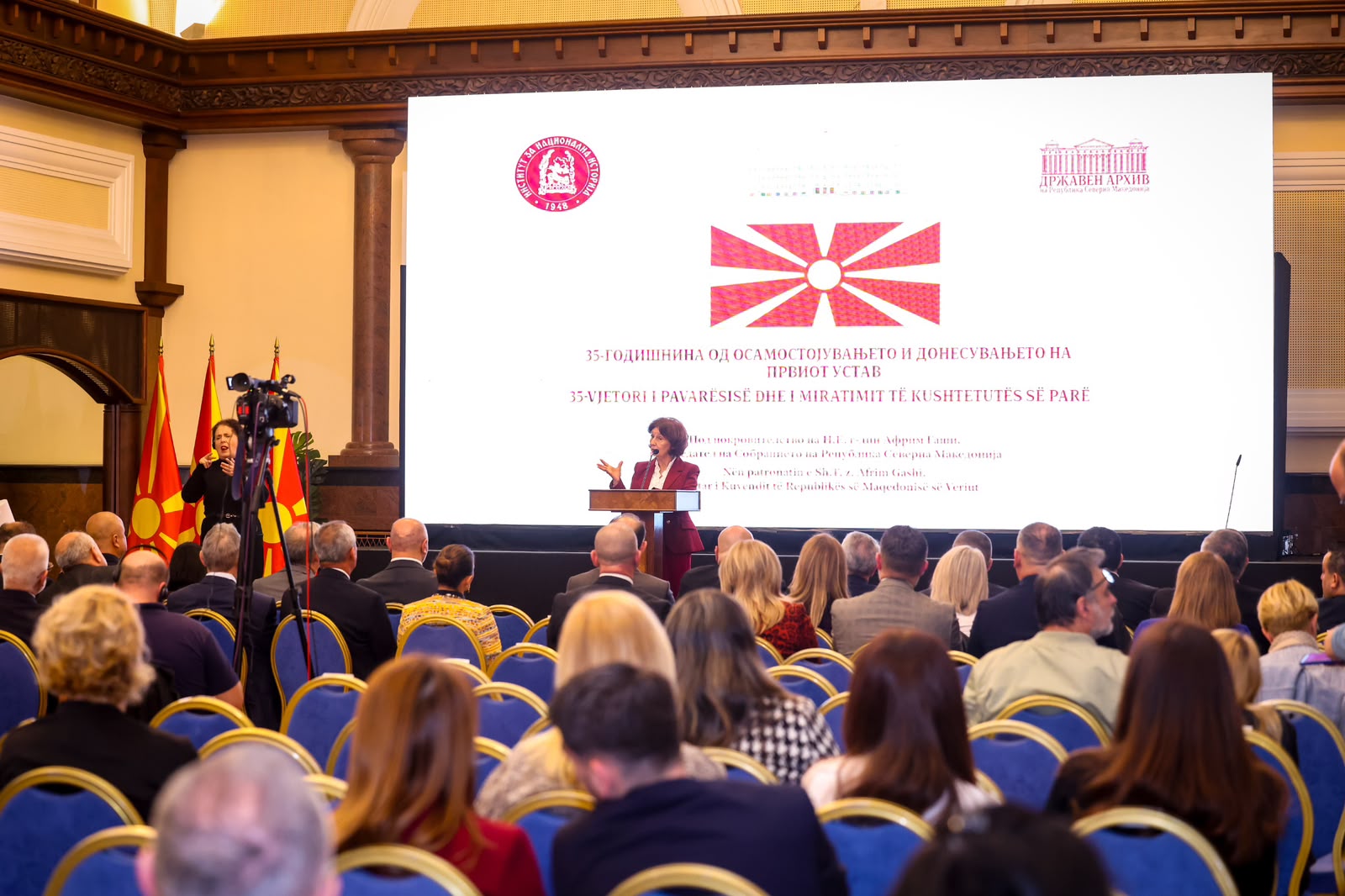
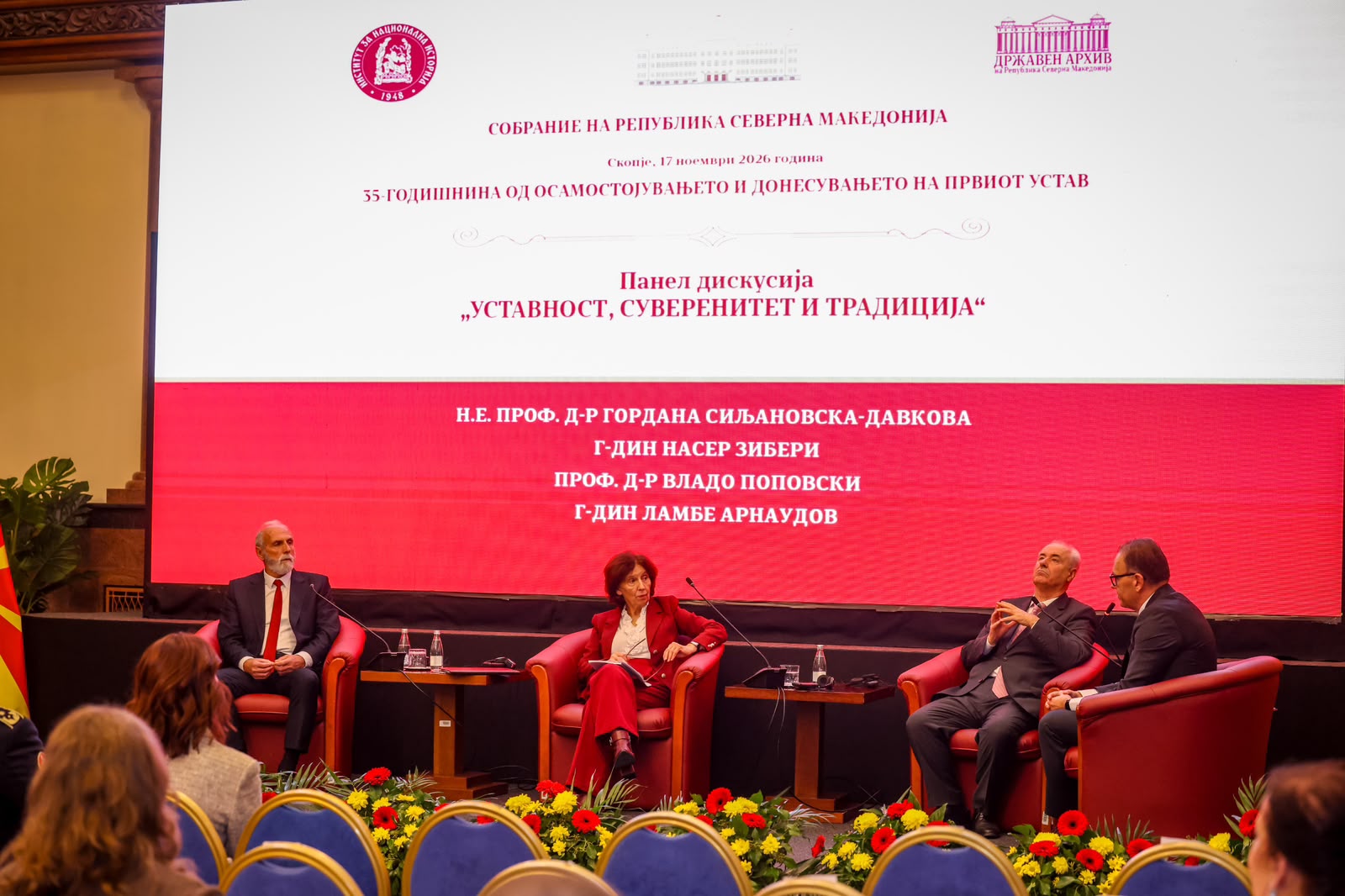
President Gordana Siljanovska-Davkova delivered an address and participated in a panel discussion at an event marking the 35th anniversary of the country’s independence and the adoption of its first Constitution. The event was organized by the Assembly, the Institute for National History and the State Archives.
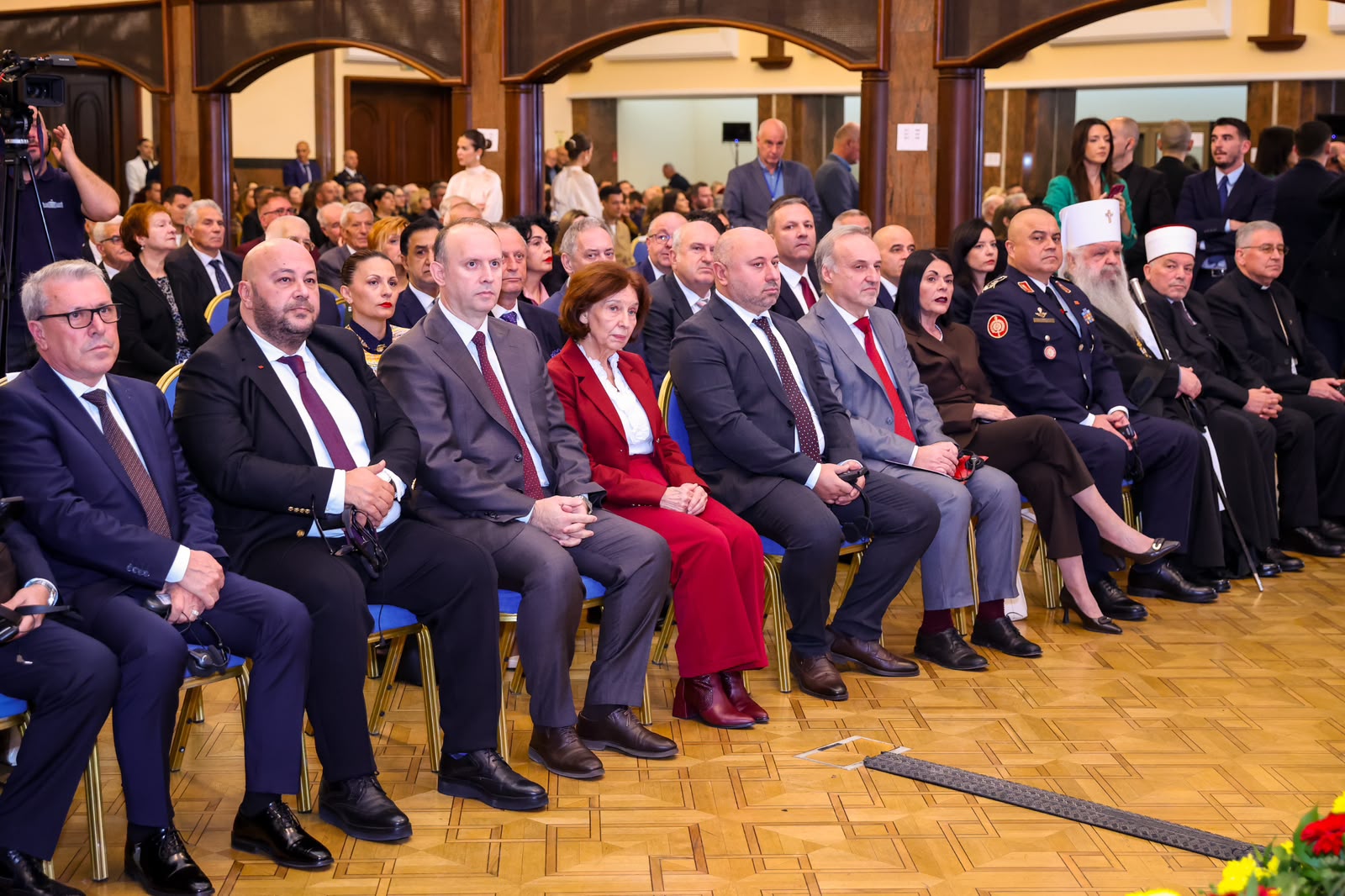
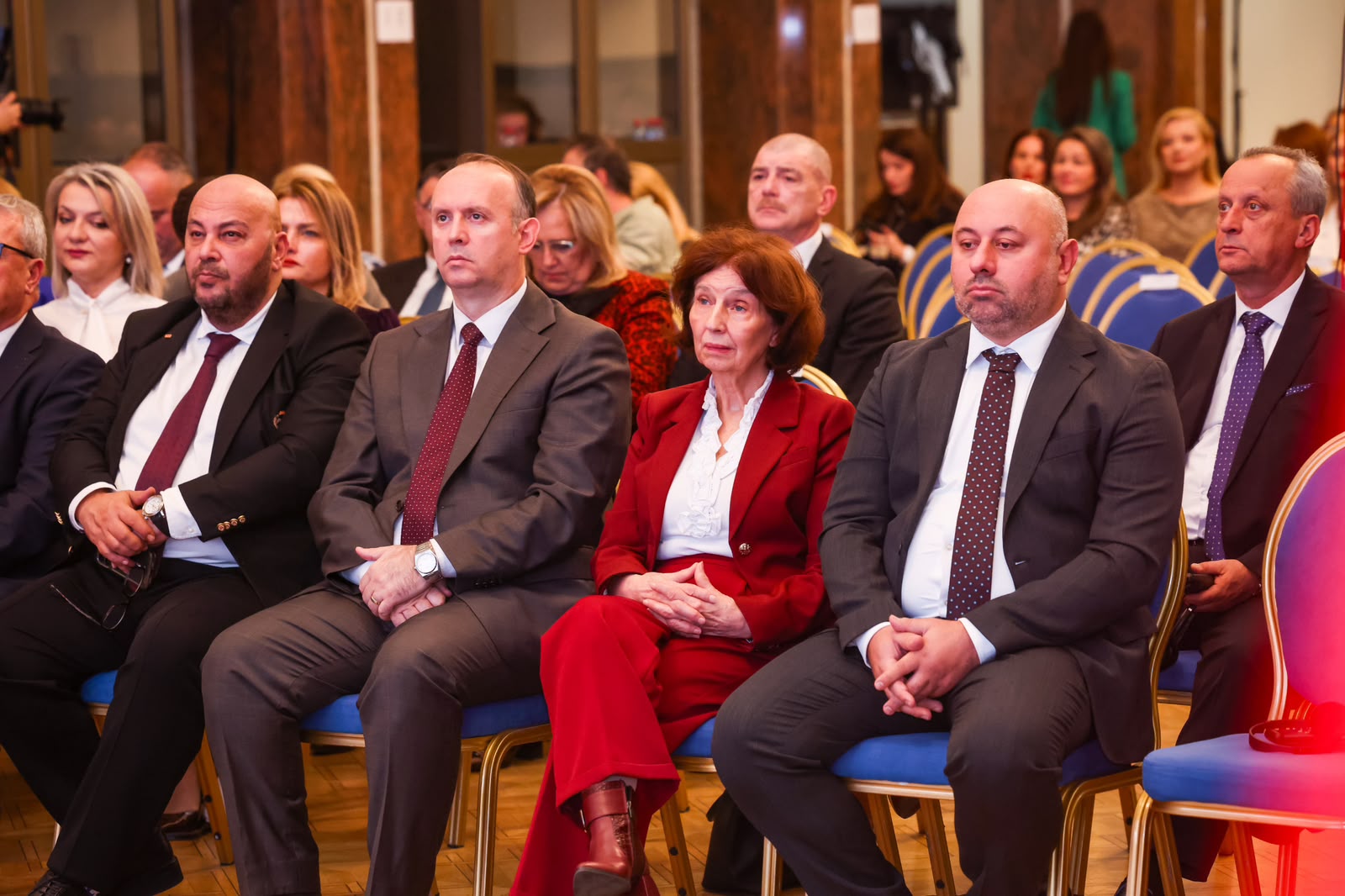
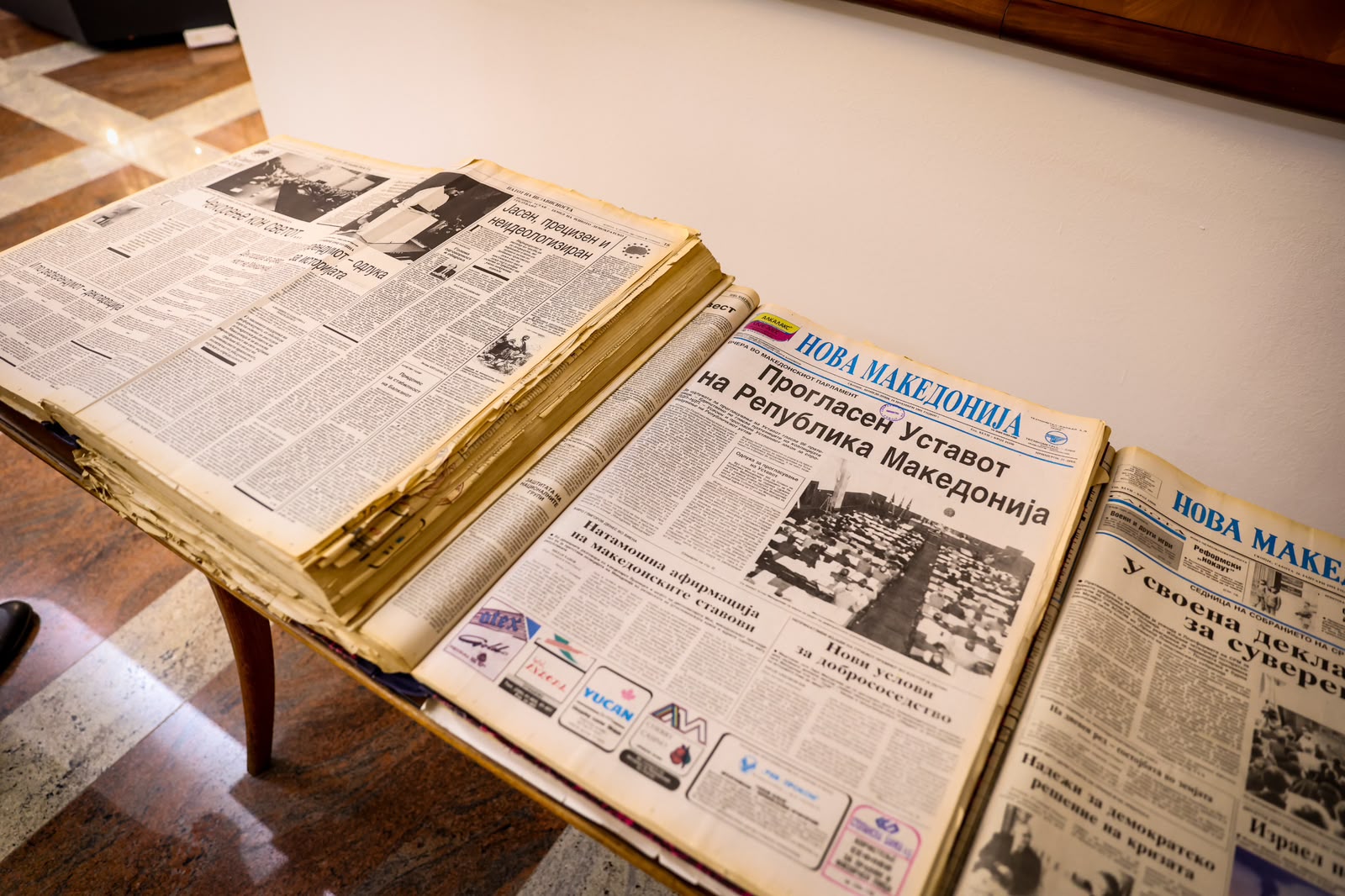
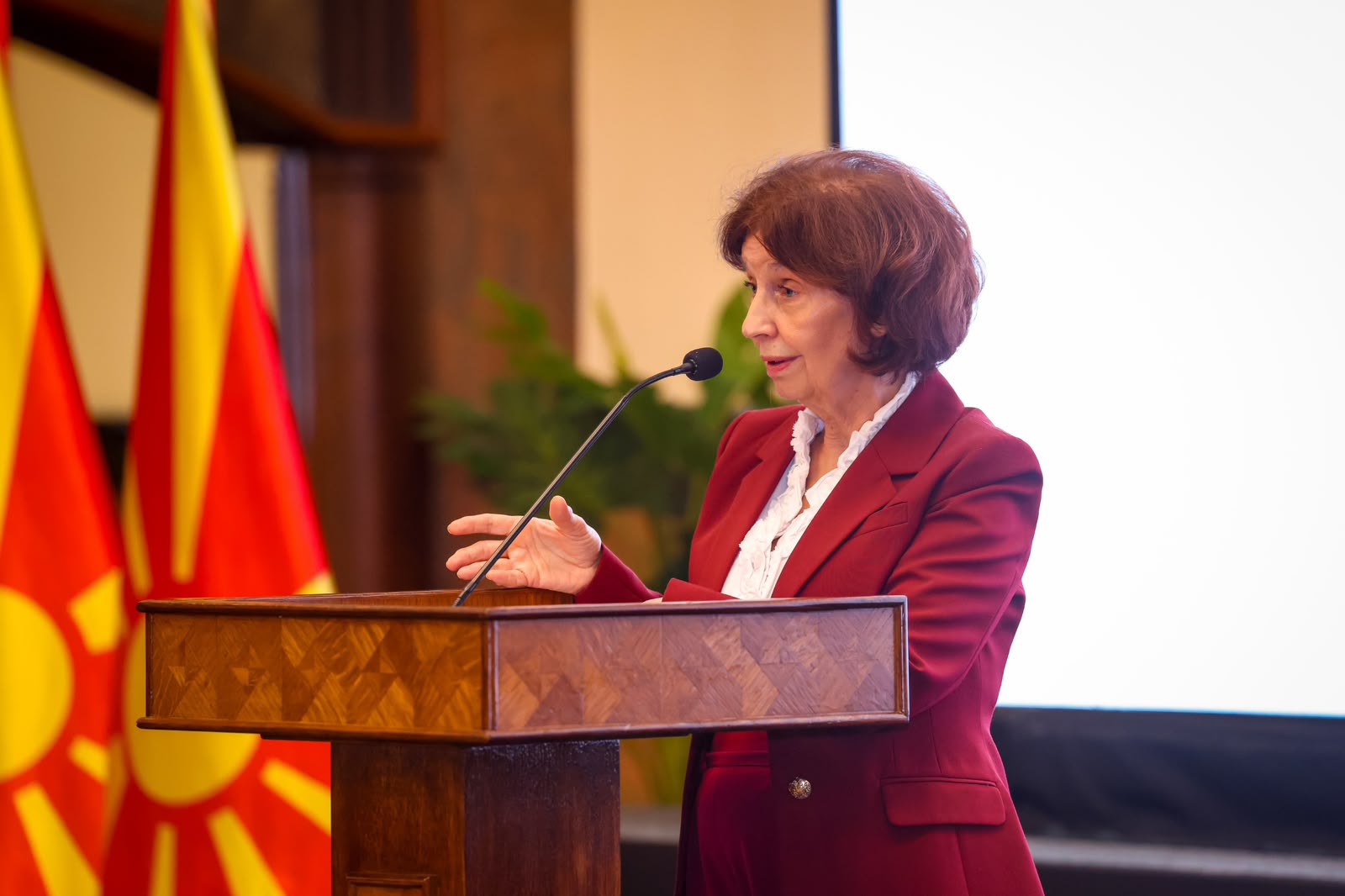
Reflecting on the writing of the 1991 Constitution, in the preparation of which she participated as an external member of the then-Commission for Constitutional Affairs, Siljanovska-Davkova highlighted the immense dedication shown by the members of the Constitutional Commission, as well as the entire first parliamentary composition, toward the critical political task before them. She specifically noted the tolerant nature of the debate between those with differing views, i.e. the proponents of the “national” versus the “civic” concept.
Despite the tense, pre-war atmosphere across the Yugoslav region, the presence of the Yugoslav People’s Army on Macedonian soil, and the tight deadlines for the Constitution’s adoption, she characterized the process as democratic, inclusive and transparent, describing the majority of the constitutional provisions as standard. She considers the fundamental values of the constitutional order, as well as the freedoms and rights of humans and citizens, to be of particular importance – a point also affirmed by the Badinter Commission in 1992. However, she raised concerns regarding the structure of the separation of powers, the status and competencies of the Constitutional Court, the provisions for states of war and emergency and the system of local self-government.
Regarding constitutional development, she points out that 21 out of the 36 amendments were initiated from the outside, in the spirit of “state-building”. Furthermore, the section preceding the Constitution itself has been amended twice; it now employs the phrase “parts of peoples”, which does not align with the category of “communities”, a term introduced into the normative text by the 2001 amendments.
In her view, the amendments are drafted using inconsistent and poor constitutional-legal technique, rendering them unclear and difficult to comprehend, while the Preamble is rendered entirely unintelligible.
Frequent changes, especially those imposed from the outside, undermine the status of the Constitution as the supreme law and as the overarching social charter of the citizenry (in the sense of Rousseau’s “Social Contract”). Moreover, this process relativizes and marginalizes the concept of “constitutional patriotism”, as discussed by Jurgen Habermas.
The President proposed the Speaker of the Assembly to draw inspiration from the successful experience of the First Constitutional Commission and expand the existing body to include external members – experts who, alongside current Members of Parliament, would work continuously on analyzing the implementation of the Constitution, identifying issues within the constitutional order and proposing solutions. This would also encompass drafting the section of the Constitution concerning the relationship between national and European law.
Finally, Gordana Siljanovska-Davkova highlighted the unique nature of the European idea and the democratic European political system, emphasizing, in particular, the importance of upholding the principles and values enshrined in the European constitutional documents, without which the EU cannot function as a philosophy, but merely as a political and bureaucratic machine.