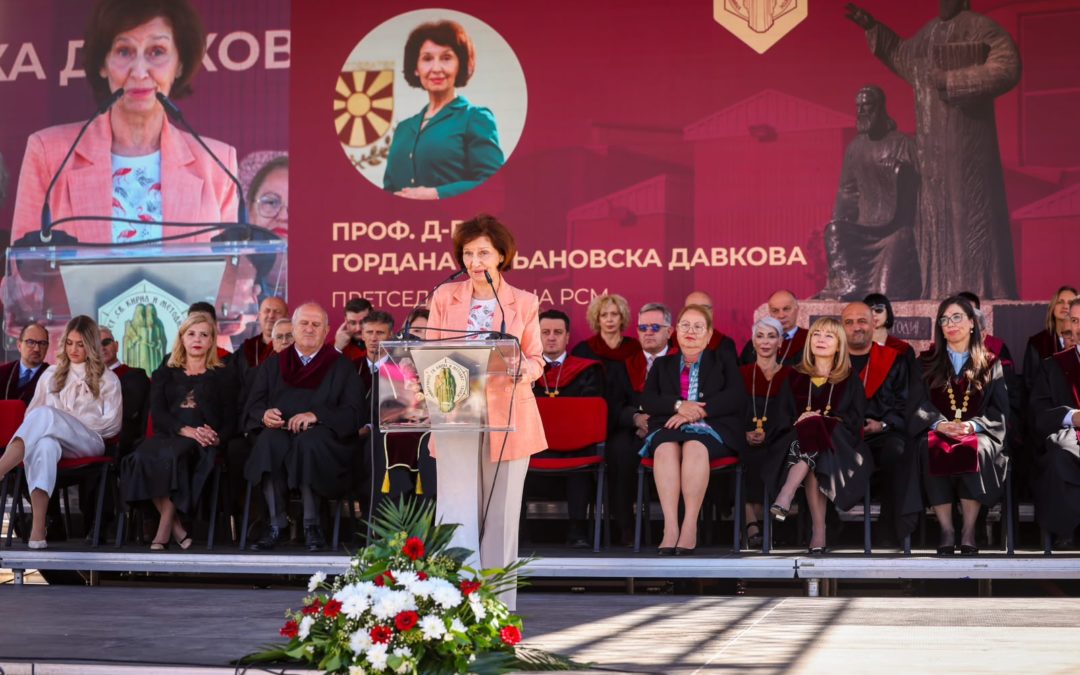
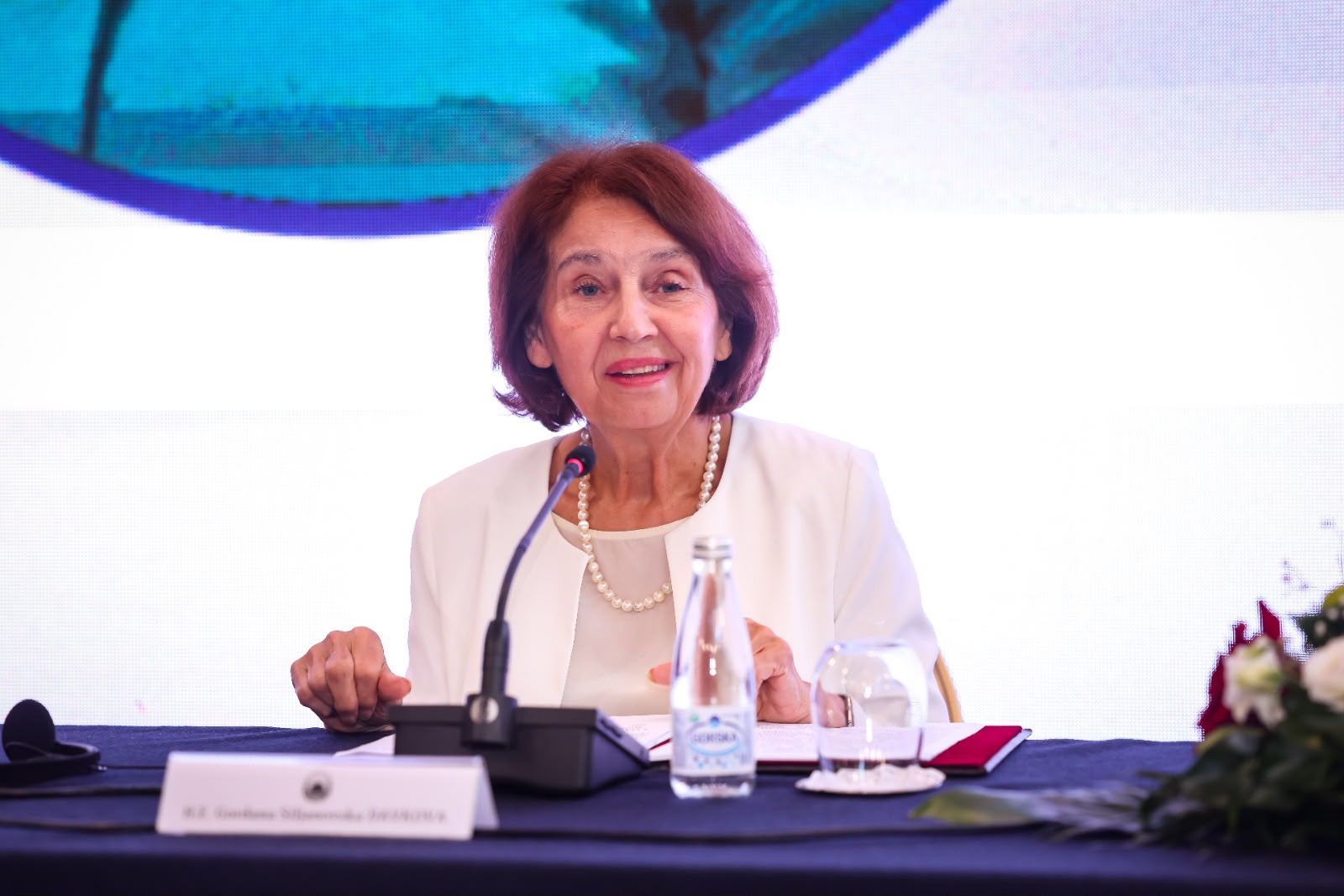
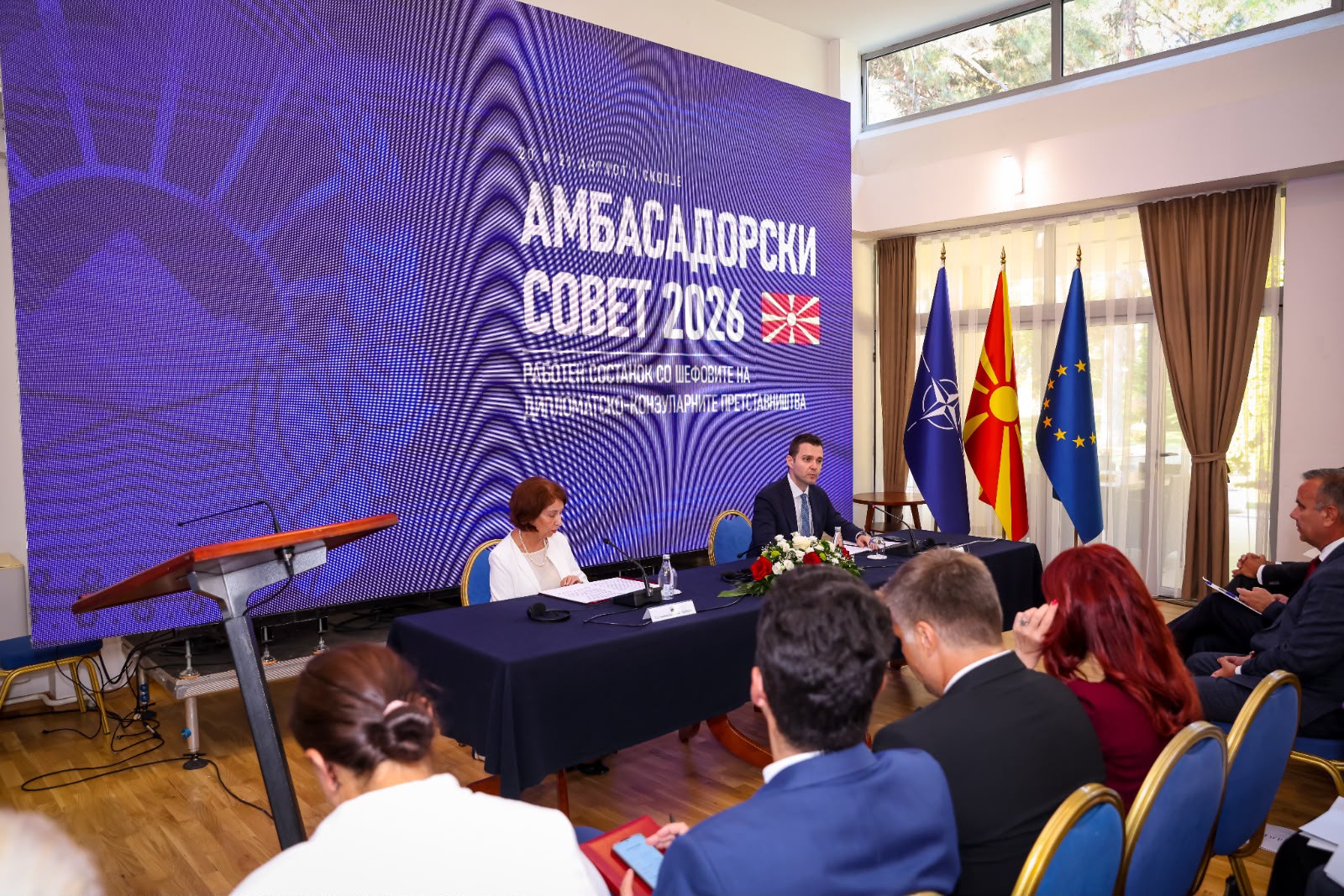
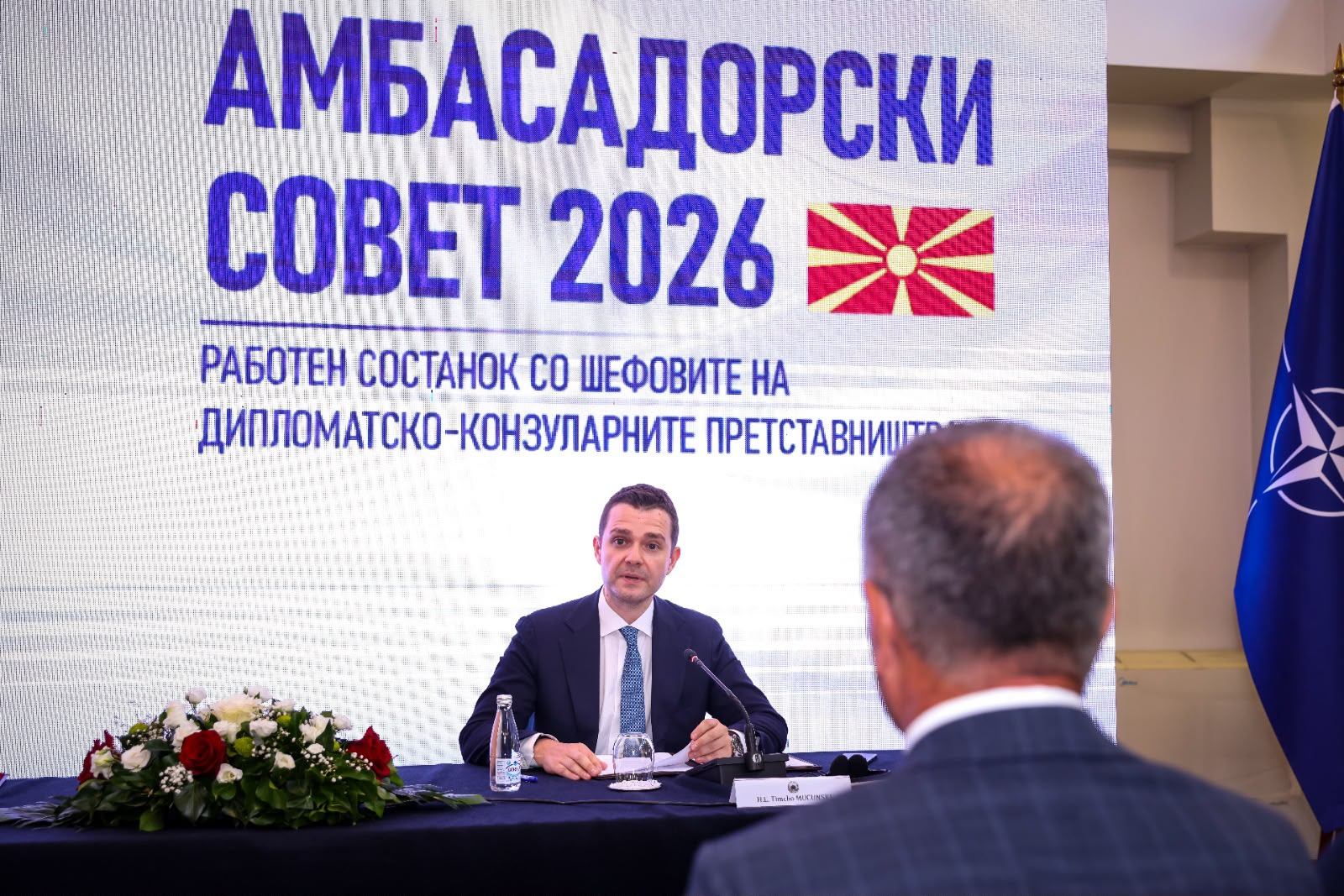
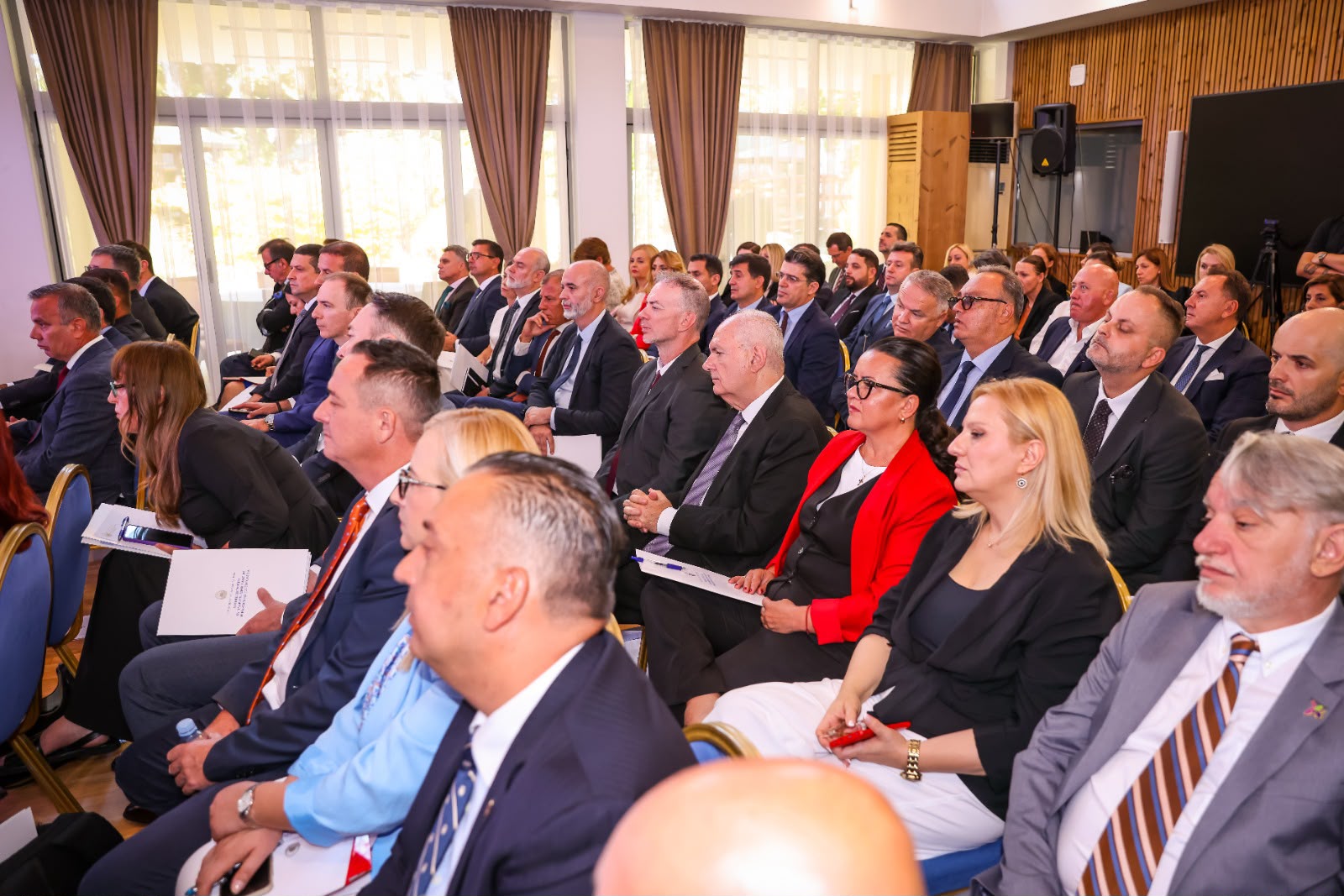
President Gordana Siljanovska-Davkova addressed the Ambassadorial Council today in Skopje.
According to her, in the new multipolar reality, we must strengthen proactive diplomacy, guided by a clear national, non-partisan foreign policy compass. She recalled that in times of weak multilateralism and growing multipolarity, institutional reforms of international, but also European structures, are necessary for the purpose of prevention or rapid response to security threats, but also domestic adaptation to new challenges.
Siljanovska-Davkova pointed out that the European integration is no longer only a political, but also a strategic, economic, energy, geopolitical, security and demographic imperative, equally for candidates and members.
She insists on a predictable and credible negotiation process, free from bilateral conditionality.
Speaking about the role of the diplomatic network, Siljanovska-Davkova said that ambassadors are the image of the state in the regional, European and global mirror, so their expertise, competence, knowledge of the host country and ability to represent national interests are essential for the credibility of the Macedonian diplomacy.
According to the President, the diplomatic profession requires knowledge, experience and continuous monitoring of political, economic and social processes in the host country, but also beyond.
For her, an ambassador is not only a representative who represents the policies of a state, but also a person who needs to understand the world of the host, recognize changes, detect risks, but also create opportunities for political, economic, scientific and cultural cooperation.
The President stressed the need for two-way and essential communication between diplomatic and consular representatives with the Ministry of Foreign Affairs and the President. She is seeking to revive the legal provision through parliamentary practice, whereby ambassadors will address the competent parliamentary committee not only before their departure, but also upon their return, presenting the results achieved.
She pointed out that creating conditions for young people to stay at home is very important and called for real ties with those living and working abroad, but also building an environment for return.
Siljanovska-Davkova also pointed out the need for stronger economic, scientific, technological and cultural diplomacy, as well as for stronger bonds with the diaspora, as a significant human and intellectual capital.
Siljanovska-Davkova assessed that in times of great geopolitical upheavals, we need diplomacy that is both principled and pragmatic, grounded in values, but open to new realities, diplomacy that is not only a messenger of state policy, but a competent instrument, capable of representing the national interest with knowledge and dignity.