Distinguished guests,
Ladies and gentlemen,
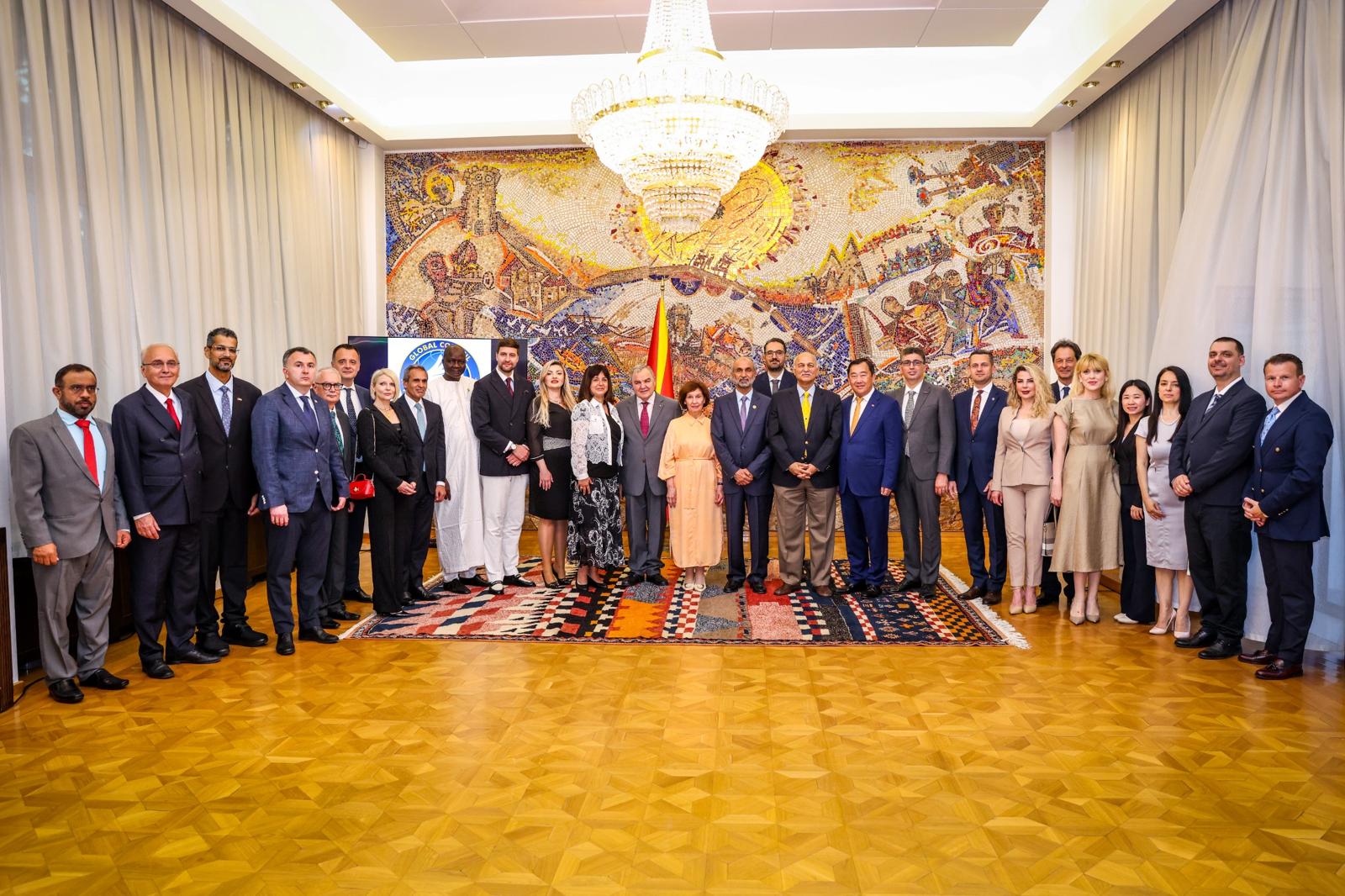
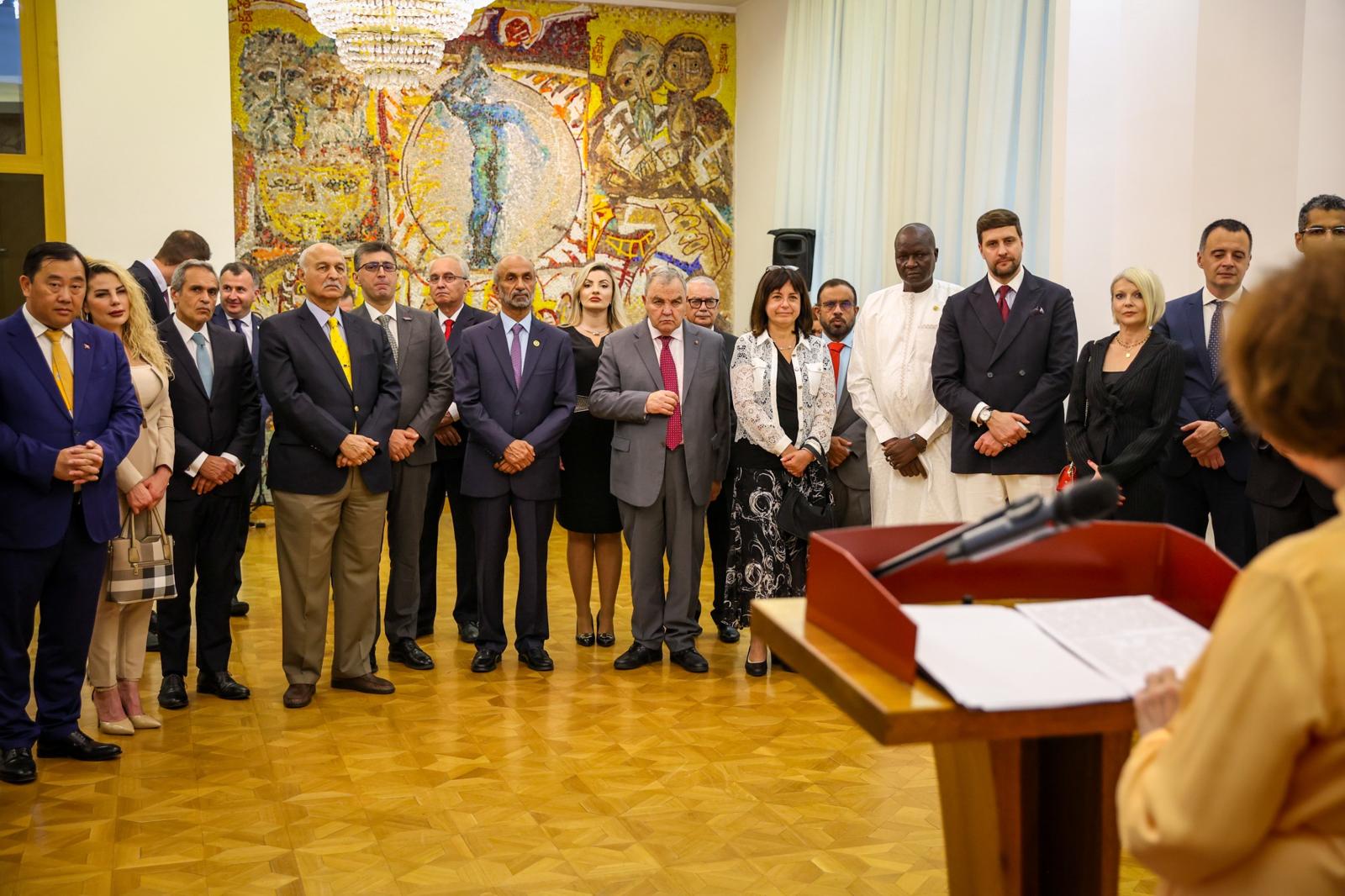
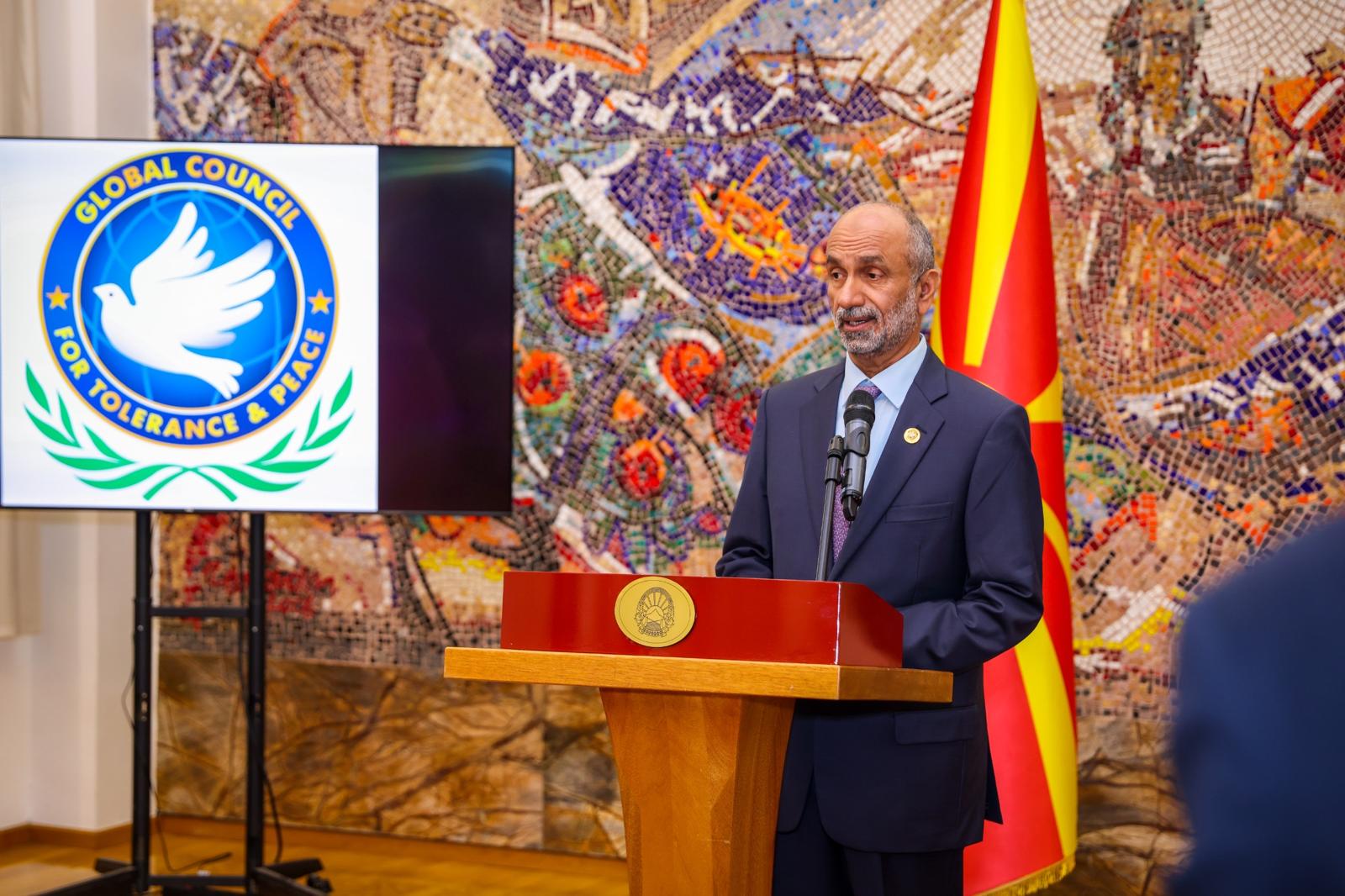
It is a great honour and a sincere pleasure to welcome you to our country for the 14th Plenary Session of the International Parliament for Tolerance and Peace, dedicated to a theme that could hardly be more timely or more necessary: “Advancing Tolerance and Peace: The Strategic Role of Parliaments in Shaping and Enacting Policies for the Future.”
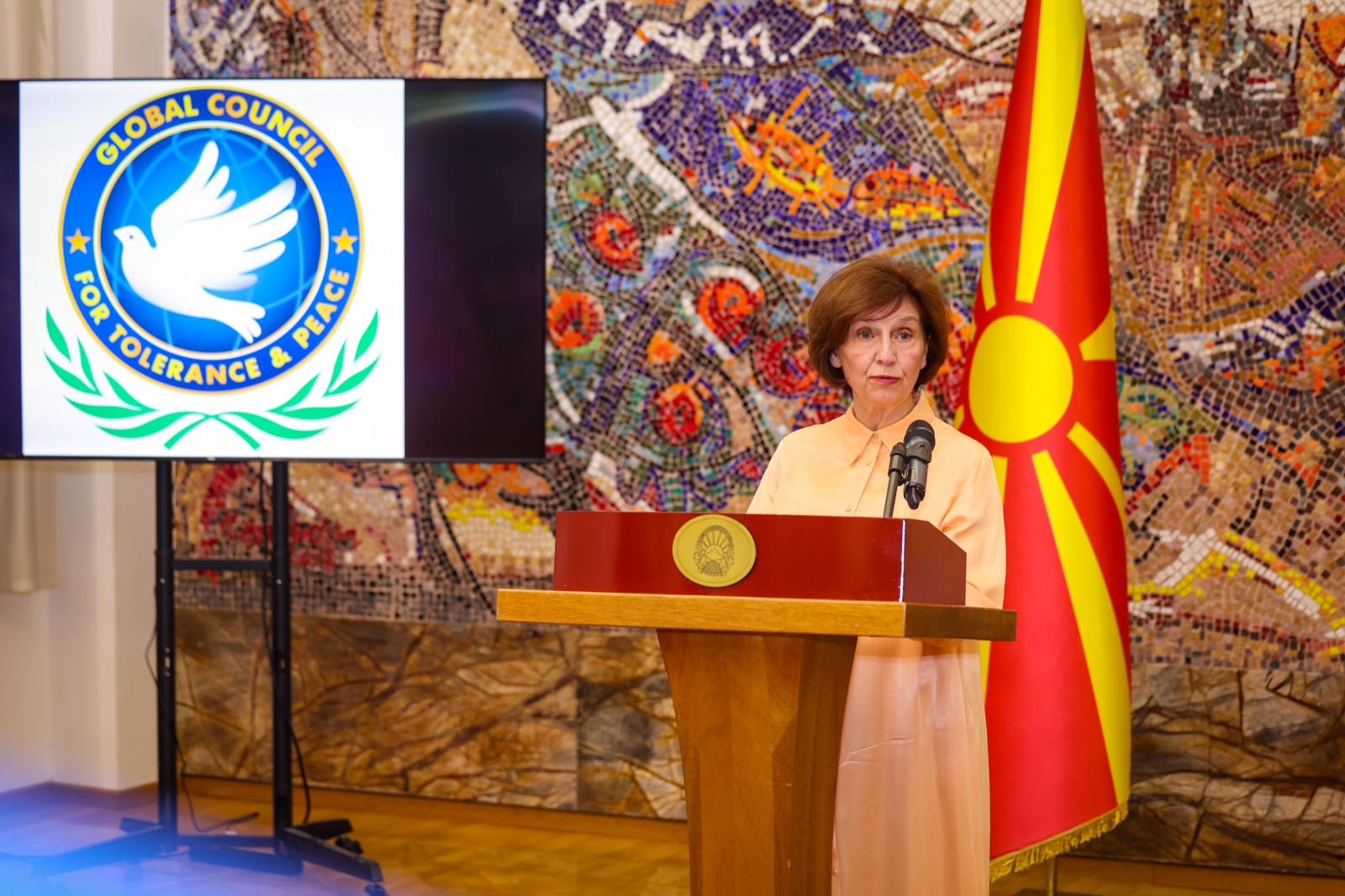
I wish to express my appreciation to the International Parliament for Tolerance and Peace, an international parliamentary platform established within the framework of the Global Council for Tolerance and Peace, for choosing our country as the host of this important gathering. I know closely and highly appreciate the work of the Global Council for Tolerance and Peace and its consistent commitment to dialogue, coexistence and a culture of peace.
I also remember with particular warmth my visit to the United Arab Emirates this past February, when I participated in the World Governments Summit in Dubai. During that visit, I had the honour to visit the Emirate of Fujairah and, upon the kind invitation and gracious hospitality of H.E. Ahmed bin Mohammed Al Jarwan, to visit the Al Aqah Museum. In the United Arab Emirates, I saw, with my own eyes, how strong traditions and bold investments in advanced technologies can be brought together into an extraordinary synthesis. I saw that the future does not have to erase memory, and that modernity can be stronger when it is rooted in heritage.
At the World Governments Summit, we spoke about the future of governance, technology, innovation and the capacity of states to respond to the needs of citizens. Yet, at that very moment, the later escalation in the Middle East had not yet unfolded in the way we have witnessed since the end of February. Only a short time after leaders and experts gathered to discuss the future, the Middle East was once again drawn into a dangerous spiral of conflict. This painful contrast reminds us of a simple but profound truth: peace is never a permanent possession. Peace is a fragile achievement, renewed each day through wisdom, restraint, dialogue and responsibility.
As Martin Luther King Jr. reminded humanity, peace is not merely a distant goal, but a means by which we arrive at that goal. Today, that wisdom speaks to us with renewed urgency. We live in a time when war has again entered the vocabulary of everyday politics, when civilians pay the highest price for strategic miscalculations, and when the language of dialogue is too often replaced by the language of force.
According to leading international research institutions, the global security environment is deteriorating. The Stockholm International Peace Research Institute estimates that conflict related fatalities rose to around 239,000 in 2024. The Peace Research Institute Oslo together with the Uppsala Conflict Data Program indicate that 2024 marked the highest number of state based conflicts recorded since 1946. The Armed Conflict Location and Event Data Project warns that political violence and conflict exposure have become part of the lived reality of an alarming share of humanity. Behind every number stands a human face, a family, a destroyed home, a child whose school has become a shelter, a community whose memory has been turned into grief.
This is why today’s gathering is not ceremonial. It is deeply political in the noblest sense of the word. It is moral. It is human.
The international order is passing through a period of profound uncertainty. Multilateralism, which for decades offered a framework for dialogue, compromise and common responsibility, is increasingly being replaced by multipolarisation, fragmentation and competitive spheres of influence. Trust in international institutions is declining. Global rules are too often applied selectively. International law is invoked by many, but defended consistently by too few. We are witnessing not only geopolitical rivalry, but also a serious crisis of leadership.
In such a world, the role of parliaments becomes indispensable. Governments negotiate, but parliaments legitimise. Executives act, but parliaments scrutinise. Diplomats build channels, but parliamentarians bring the voice of citizens into international dialogue. Parliamentary diplomacy is therefore not a substitute for classical diplomacy. It is its democratic conscience.
Parliaments are places where difference is not supposed to be silenced, but heard. They are institutions where conflict is transformed into debate, where political disagreement can be disciplined by procedure, and where the majority is reminded that democracy also means respect for the minority. In this sense, every parliament is, or should be, a school of peaceful coexistence.
For me personally, today’s theme has a special significance. As a former member of parliament, as a lifelong advocate of human rights, as a former member of the Group of Independent Experts on the European Charter of Local Self-Government of the Council of Europe, as its former Vice President, and as a former member of the Venice Commission, I have always believed that institutions matter most when passions are strongest. Law, dialogue, constitutionalism and democratic procedure are not technicalities. They are civilisation’s answer to arbitrariness.
Parliamentary diplomacy has a unique capacity to humanise international relations. It enables representatives of different nations to speak not only as officials, but also as elected voices of their people. It creates bridges where formal diplomacy may be frozen. It allows societies to recognise each other beyond stereotypes, propaganda and fear. It reminds us that peace is not made only by treaties signed in grand halls, but also by patient conversations, by listening, by understanding the anxieties of others, and by refusing to turn difference into enmity.
In an important transitional period such as this, when differences are increasingly perceived as danger and hostility, when the perception is spreading that the various problems of states stem from the “black sheep” within society, and when populism and crude propaganda are increasingly replacing deep thought and the willingness to know the different, the fact that such an event, bringing together parliamentarians from different countries, is taking place in our country carries special importance.
Although from time to time interrupted by short-term crises, since its independence our country has succeeded in creating a vivid model of democracy, recognised for the rights and constitutional guarantees enjoyed by minorities, often above international standards. For centuries, on this land, the sounds of the ezan and church bells have been heard together, while Easter bread and iftar tables have become shared tastes of our collective memory. Even today, in our country, one can still find common sacred places visited by believers of different religions, and schools where children of different faiths and different languages sit at the same desks. The Macedonian mosaic is a model that does not deny any of its colours, but recognises each colour as an extraordinary value and a separate richness of this country.
That is why tolerance for us is not an imported word. It is part of our lived history. It is not always easy, and it is never automatic. It requires institutions, education, courage and leadership. But it is possible.
Ladies and gentlemen,
The future will not be shaped only by technology, artificial intelligence, energy corridors or military alliances. It will also be shaped by the moral quality of our politics. The question before us is not only what kind of world we are building, but what kind of human being our politics is producing. Are we producing citizens capable of empathy, or crowds trained for suspicion? Are we educating young people for dialogue, or mobilising them for resentment? Are we strengthening institutions, or replacing them with anger?
Parliaments have a strategic role in answering these questions. Through legislation, they can protect equality and human dignity. Through oversight, they can prevent the abuse of power. Through public debate, they can reduce fear and misinformation. Through international cooperation, they can build networks of trust across borders. Through education and example, they can show that disagreement does not have to become hatred.
The International Parliament for Tolerance and Peace embodies precisely this idea. It brings together parliamentarians not around a narrow national agenda, but around a universal human responsibility: to prevent violence, to promote understanding, and to defend the dignity of every person. In a world where walls are often built faster than bridges, this platform reminds us that bridges remain the most courageous architecture of politics.
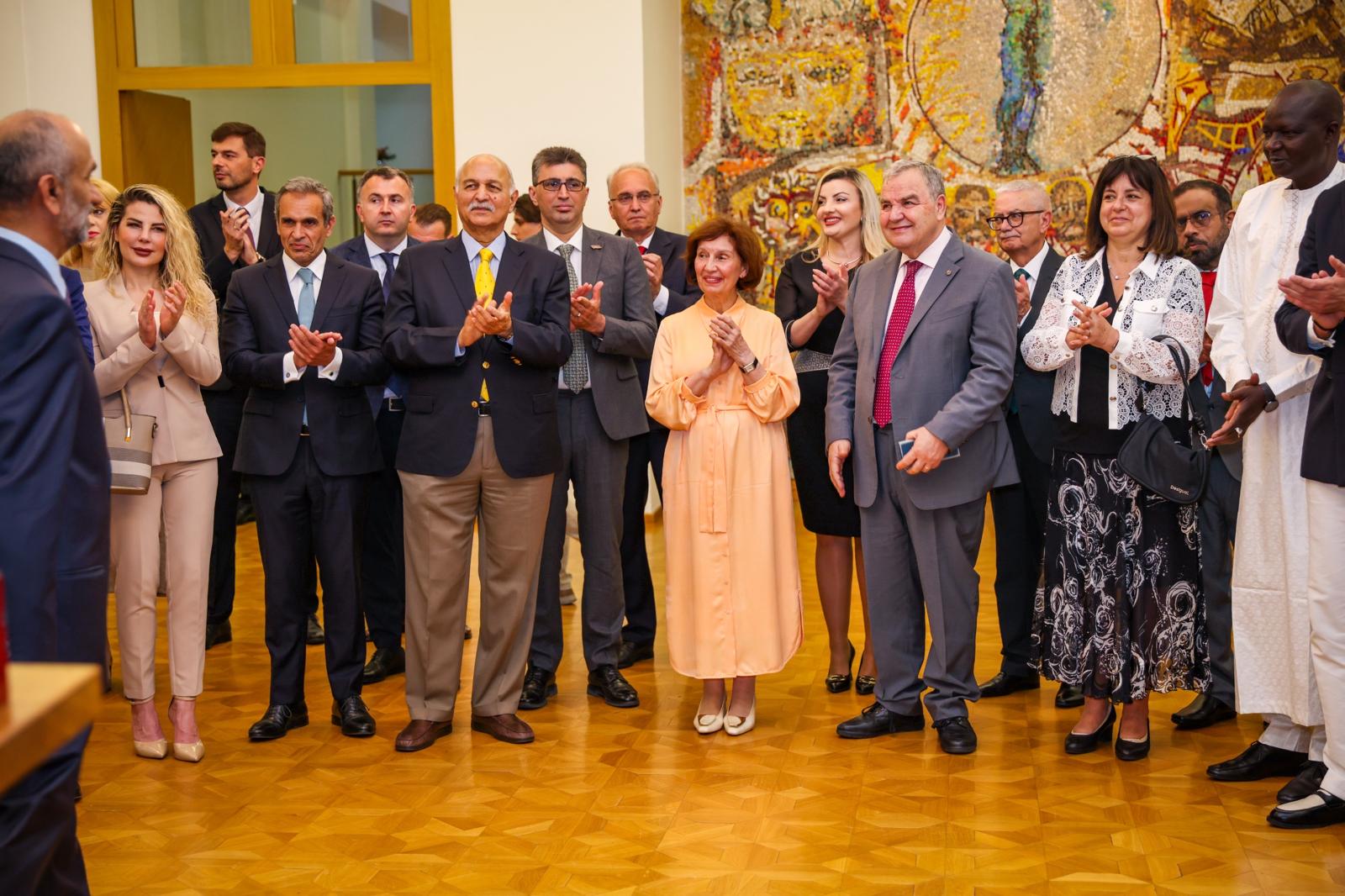
Allow me therefore to express my sincere gratitude to all distinguished guests who have travelled to my country for this session: to the presidents and vice presidents of parliaments, to representatives of international parliamentary organisations, to senators and members of parliament, and to all those who believe that dialogue is not weakness, but strength.
May your discussions be wise, open and fruitful. May this gathering send a clear message from Skopje: that tolerance is not passivity, peace is not silence, and parliamentary diplomacy is not protocol. Tolerance is active respect. Peace is daily work. Parliamentary diplomacy is democracy speaking across borders.
But let there also be another message from Skopje. In the age we live in, there is no place anymore for the denial of identities, for the instrumentalisation of different interpretations of identity and history as tools to obstruct the future of a country and its society, nor for demands for historical revisionism. The involvement of parliaments in such processes makes them even more unfortunate. Parliaments should be guardians of dialogue, democratic legitimacy and human dignity, not arenas where history becomes a weapon against the future. I wish the 14th Plenary Session of the International Parliament for Tolerance and Peace every success.
Thank you.