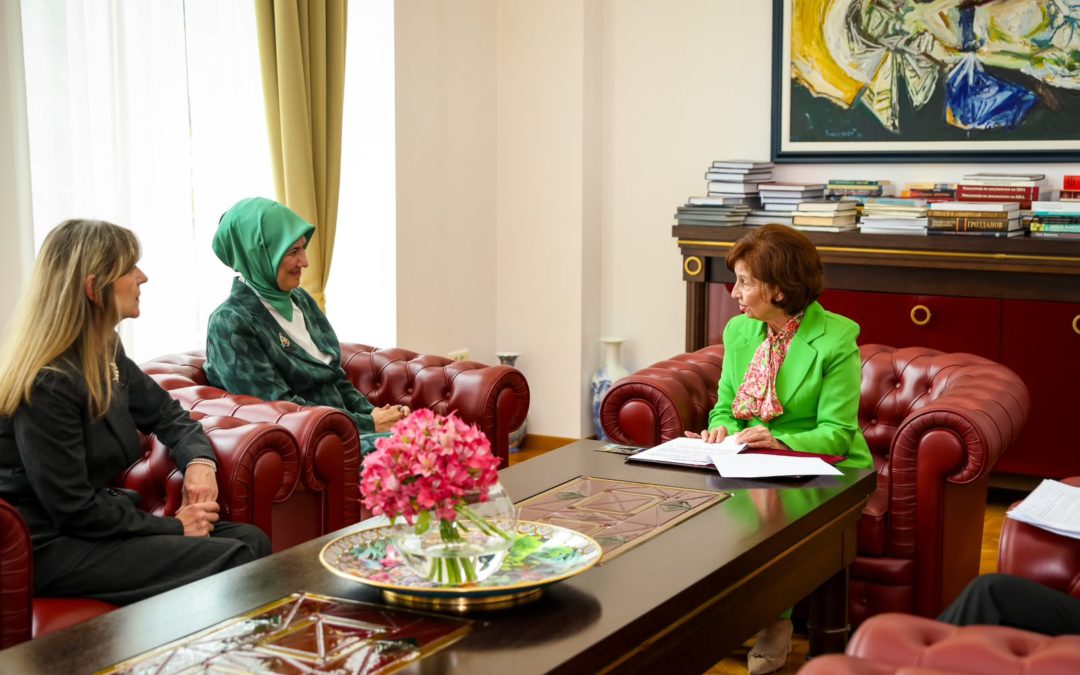
Journalist question: You had a meeting with your colleague Iotova, what did you discuss?
President Siljanovska-Davkova: The meeting was open and we expressed our own positions. Of course, every conversation starts somewhere and at some point.
Today we also started this conversation about differences, about our views, about their views. For me, the most important thing is that we agreed that we have wasted a lot of time, that perhaps we would look at all problems differently, including such difficult problems, obviously, if there had been different communication, as there used to be.
Among high school students, among students, among academies, of course in culture there is, but not with such intensity, if infrastructure facilities were built together, if applications were made in joint projects, why don’t we prove friendship in action, do not perceive the other as a threat, but as a neighbor and thus the chances for good neighborliness and friendship are greater. That is one thing, but I have said many times that politics is far from the art of the possible, of course, my colleague Mucunski and I wanted to hear the real positions. You cannot solve anything through dialogue, if you do not know what your positions are.
Journalist question: Did you hear the other side’s positions?
President Siljanovska-Davkova: Yes, we heard their positions, I give a chance to conversations, negotiations and dialogue, so as not to remain a monologue. I will just say that one thing has become clear to both of us. It is not only the constitutional amendments that are at stake, but also other requests related to the protocols, which arise from the work of the two commissions, i.e. the historical commission. I can say only that for now. We also presented our positions, our views and especially emphasized the obligation of all members of the Council of Europe, which are also members of the European Union, to respect the judgments of the Court in Strasbourg, because the judgments are valid and all members of the Council of Europe have judges in the Court in Strasbourg. We expressed the view that we should meet more often, to talk, no matter if it seems that it will not yield results if you defend your own positions, but usually the dialogue is not certain of the result if you are buried in your positions, you cannot step forward. But I would assess the meeting as successful, first of all I assess the Summit as successful, since it has existed for 30 years and that is why I pointed out Sofia. Everyone called for wisdom; there is logic and wise people like those who formed the European Union, since then the European community has also formed the process of Southeast Europe. Now, if we analyze how much we have recognized the regional interest, how much we have supported each other everywhere, which means also in the European Union because this is like a regional society aware that knows that together we can be louder, if we are united, that we can defend regional interests, be successful in projects, etc. It was very successful. We all called for further cooperation, recognized the work of the chairman, the presidency, in the case of Bulgaria where this process was established 30 years ago, but we all called for words to be appealing, but actions are more important, i.e. the steps we will take and that it is logical to have synergy between what is said and what is done.
Journalist question: What will be the next steps? You say it is important to take steps. After such a meeting that you assess as productive and we heard that the only conditions are not only the constitutional amendments, what is next? What would you do, given that the non-paper that was presented in Tivat is also on the table?
President Siljanovska-Davkova: That is right. Today, there was no talk of the non-paper at all. I tried to refer to the new role, which is more open, more decisive, of the President of France and Mr. Merz, but there was no interest in that. The conversation mainly focused on the issues we face as neighbors, the issues of the opening of, of course, the holding of the second non-governmental conference, i.e. the beginning of the negotiations, i.e. the opening of the cluster, the basics, with which the negotiations begin and end. What can I say?
Journalist question: President, did you discuss a possible subsequent meeting with Iotova or any other meeting?
President Siljanovska-Davkova: If you mean a specific meeting, no, but we, and the President of Bulgaria, expressed our willingness to talk, to see each other, to debate, to listen to each other, to respect each other even when we disagree, and I think we passed the first test. The beginning was difficult, but we did not say that we would not see each other again, indeed we will seize any possibility of talks between us. Thus, we both expressed our willingness to continue the talks.
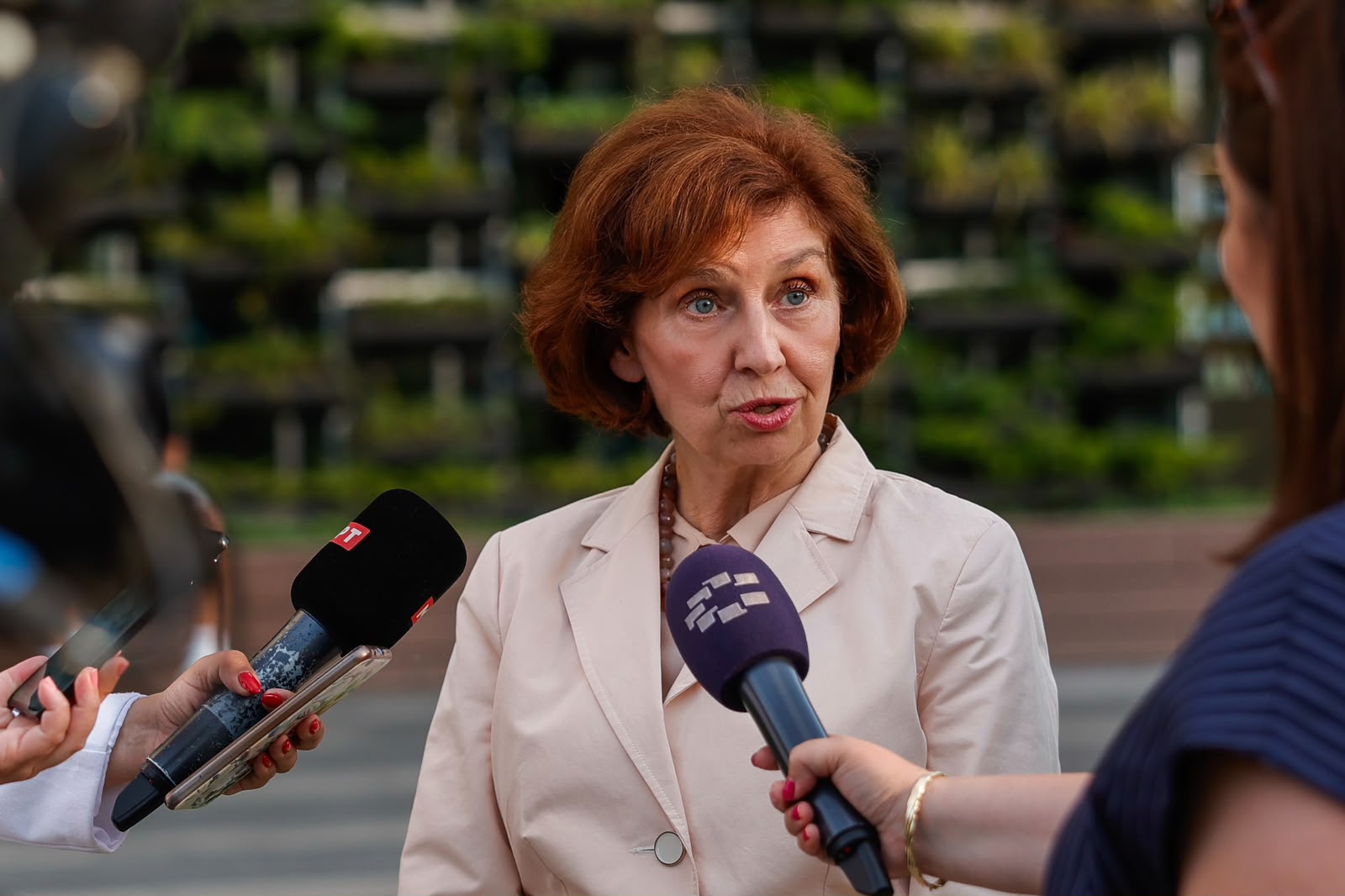
Journalist question: After the official press conference of the Chair, President Iotova, who is handing over the presidency of the South East European Cooperation Process to Romania, you were called to make a statement to the Bulgarian media. You were faced with a series of questions that were at times, frankly, tendentious and a little unpleasant for all of us who were here. How would you assess this, how should I say, this interest on the part of the Bulgarian media?
President Siljanovska-Davkova: I would not like to comment on the media, and I do not do that at home, nor here, but I would like to explain the following. We also had the presidency and chaired the South East European Process, and then the rules say that or the code says that the current chair, the chair before him and the country that takes over the presidency give a statement at the end in their own languages. In this case, it means the President of Bulgaria, the President of Albania and the Minister of Foreign Affairs of Romania, because Romania is taking over the presidency. I have attended several press conferences where there were no other questions from journalists. However, when I went to meet with the interlocutor from Kosovo I was greeted by several journalists and I did not know how to behave. To say that I will not answer your question would be like I am not cooperative and that I am not well-intentioned. Of course, I asked in English if they could ask me, but I thought it would go in some order. It was literally, how should I say, a bombardment of questions. Of course, I tried to answer some, but there was no atmosphere for answering because the journalists themselves were not listening, but at the same time they were asking questions and of course I said, I approached you with the best of intentions so as not to avoid you, but my interlocutor is waiting for me, please excuse me. That is how that event went.